Quote:
Originally Posted by VancouverOfTheFuture

i have always wondered if W.A.C. Bennett/G.M. Shrum station could just be expanded as well. the reservoir is so huge, i don't see why they couldn't install more.
|
They have to maintain flow and a baseline power generation capacity most likely. It also regulates the floodwaters in the Peace River area.
Quote:
Originally Posted by Changing City
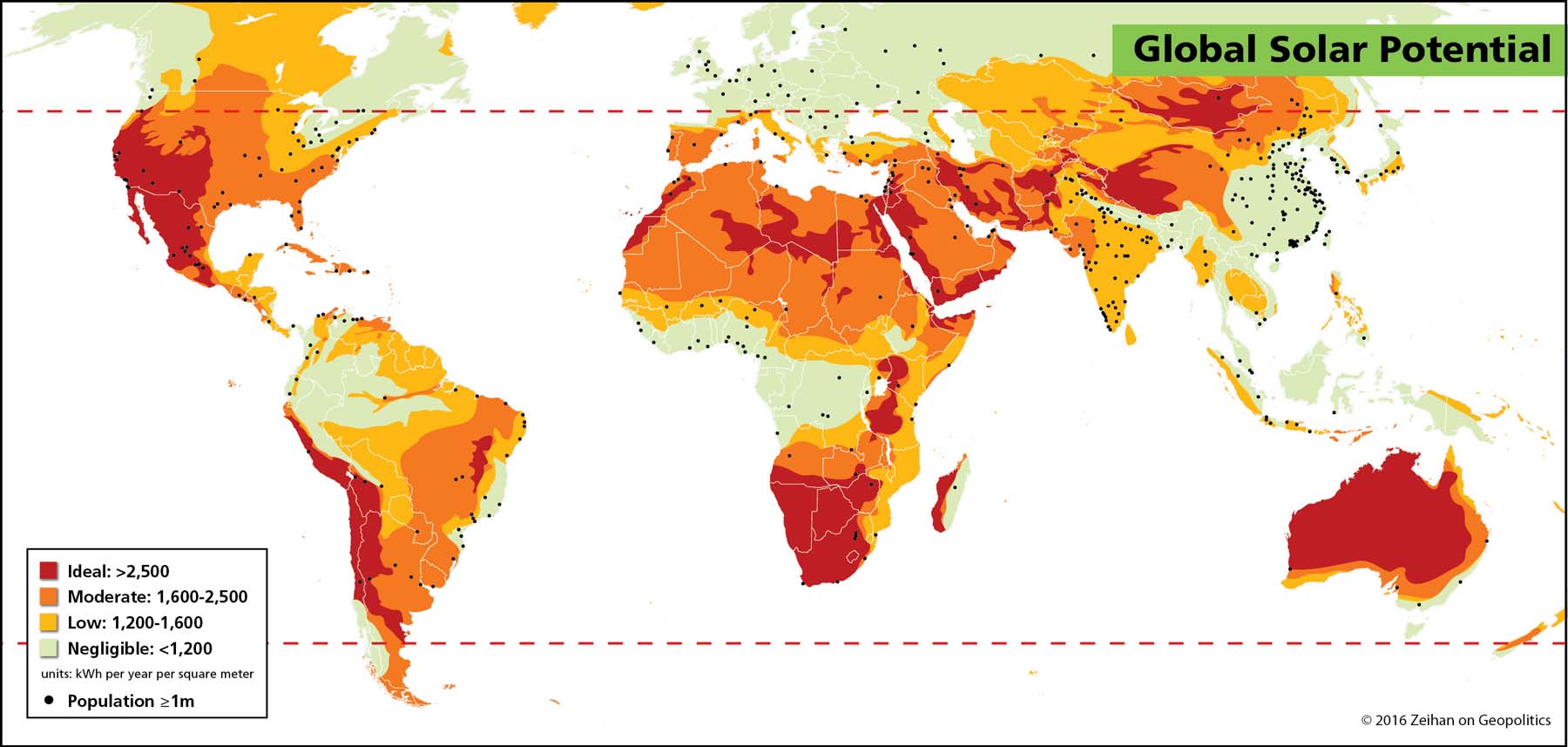
BC Hydro don't agree with you. They seem to think they have existing and committed capacity to meet demand, and having met some of their engineers, that's probably based on a robust modeling exercise that's pretty conservative. They also downplay solar, but it could play a bigger part, especially in remote or sunnier areas like the Okanagan, although it would mean less income for them.
The potential for solar in the Lower Mainland isn't huge, but if more warehouses and production plants (or film studios) with big, flat roof areas follow the lead of Snow Cap Enterprises in Burnaby (which is expected to generate half a gigawatt of electricity a year) then it could add quite a bit of locally generated power. That's a recent installation, and the costs have come down to the point that the company should break even on the investment in about ten years. |
Note that solar panels have a limited lifespan, require lots of energy to make, and have nasty ingredients inside that are difficult to recycle.
Quote:
Originally Posted by WarrenC12
WA State has nuclear, I'm not sure why but yes hydro makes the most sense for BC, it's just so flexible.
I do think Site C might be the last mega project we'll see though. We need smaller stuff that can come online faster. How long would an SMR project take?
|
https://news.gov.bc.ca/releases/2019EMPR0003-000228
Quote:
Current prices for the energy from IPPs are significantly higher than the cost of generation from BC Hydro’s heritage assets — like the W.A.C. Bennett or Mica dams — and Site C, as well as projected domestic and export market price forecasts.
The cost of heritage generation is estimated to be $33 per megawatt hour. In comparison, the cost of IPP energy is about $100 per megawatt hour on average (F17-F19).
|
https://en.wikipedia.org/wiki/Site_C_dam
Quote:
|
Site C is expected to cost $83 per megawatt hour for firm hydro power.[49]
|
The economics for small-scale power plants are worse than the large stuff. Which is why BC Hydro stopped buying from IPPs.
Note part of this may be from PPPs, which have bad economics on the long-term in general, as well as most run-of-river plants being located in fairly remote locations, far from any infrastructure.
Quote:
Originally Posted by Changing City
Until this thread started up, I wasn't up to date on how BC compares to other provinces and states on power imports and exports. Powerex (the BC Hydro trading company) is easily the biggest electricity trader in Canada - "British Columbia (B.C.) was responsible for 84% of Canada’s electricity imports. Although B.C. has generating capacity to meet internal demand, it tries to maximize the value of its generation by trading with the U.S. During the day, when U.S. electricity prices are higher, B.C. increases its hydroelectricity generation and exports electricity to the U.S. to earn more revenue. Overnight, when U.S. electricity prices are lower, B.C. significantly reduces its hydro generation, letting its hydro reservoirs refill while importing cheap electricity from the U.S." [ source]
Powerex currently uses four large export transmission lines "This system is interconnected with the western U.S. by two 500-kilovolt transmission lines on the West Coast between B.C. and Washington state; one 230-kilovolt line connecting B.C. and Washington on the east side; and a 500-kilovolt line to the east, connecting B.C. with Alberta." [ source]
In 2021 BC exported 11,430,000 MW.h of electricity, and imported 7,528,000. 61% of our exports went to California, 21% to Washington and 6% to Arizona. We exported to 14 states, and imported from 12. The vast majority of our imports came from Washington (86%) and California (11%). [ source].
While 10 years ago we imported power generated by coal (in Montana) and gas (in Washington), now we only import from clean sources (wind and hydro). [ source]. We're moving from 93% clean to 100% clean generation, as are California and Washington, our main electricity trading partners. We're currently at 96.5% renewable sources [ source]. Alberta has only around 18% renewable electricity, although wind and solar projects are coming onstream rapidly and coal is being phased out (but replaced by gas, which already provides about half Alberta's electricity generation).
This all seems to suggest to me that we have more than enough power for our own needs for some time, and that our imports and exports are all about keeping prices as low as possible. BC Hydro publications confirm that, in effect we are using our hydro facilities as batteries, to supply power when demand is higher, and wind or solar supplies are inadequate. As those sources are expanding fast both across the Rockies, and to the south, we might see even more imports and exports to maintain renewable supply at the cheapest cost. It would seem that Alberta ought to be using all the green power they can generate to substitute for their thermal production, but maybe the efficiency/cost argument (and when their green power is available) would justify adding another 500-kilovolt line. |
Surprising how much things change.
https://www.sitecproject.com/sites/defau...0Review%20of%20Project%20Feasibility.pdf
https://www.bchydro.com/content/dam/BCHy...t-plan/integrated-resource-plan-2021.pdf
Back in '05, the expectation was that we'd hit 80,000 MWh in 2025. Now it's that in 2038, under the high-end electrification plan (which I think we should be aiming for).
Wonder how that happens.
Quote:
Originally Posted by Changing City
They've done better than that; there's a 20 year plan already published. They aren't concerned about Vancouver Island any time soon. "The Vancouver Island capacity Load Resource Balance before planned resources, shown in Figure 4-4, indicates that additional capacity resources are not required for the Vancouver Island region until fiscal 2034".
As I read it, through a combination of reduced demand from existing customers, improvements to the transmission system and limited new generation, they seem to think they can manage to supply the likely demand to 2041.
They say that "Based on BC Hydro’s high-level analysis of comparative unit energy costs, onshore wind resources are likely the lowest cost supply-side energy resource in the near-term. While difficult to predict decades out, large-scale solar resources are expected to become more competitive over the long-term.
Utility-scale batteries are a newer capacity resource with a relatively short lead-time, which can be deployed on a flexible and scalable basis, and are expected to see cost declines over the next 10 years."
They specifically address the additional demand from the switch to EVs, and are intending a management program (through cost benefits from charging off-peak) to manage the requirement for more power. |
Note that projections for the use of utility-scale batteries and solar rely mostly on projections of the continued trends for reduced costs- which are far from guaranteed.
Also, looking at the graph, it's actually
2030. 2041 is reached by adding 'future resources'- basically IPP power.
I would link to my post previously on the other thread:
https://www.skyscraperpage.com/forum/showpost.php?p=9535076&postcount=2714
Site C+E might get us to around ~72-4GW/y, so you'd need another ~8-10GW/y.
We could hit that with wind across the Okanagan and Peace River Areas.
Or just 1 of the Liard River Dams (
https://www.arlis.org/docs/vol1/Susitna/SUS/3/SUS380.pdf)- probably the "Devil's Gorge" Project- which would be equivalent in size to the WAC. Bennett Dam in capacity.
The other 2 projects (Beavercrow and Hell's Gate - would be the Liard's Site C and Peace Canyon, respectively) which have comparable capacities.
This option is probably the safest to go by, and it gives us a clear roadmap on what to do next if we need the power, like the Peace River Project once did.





 Prev
Prev









 Linear Mode
