HomeDiagramsDatabaseMapsForum About
     

Go Back   SkyscraperPage Forum > Discussion Forums > City Discussions


Reply

 
Thread Tools Display Modes
     
     
  #1441  
Old Posted Jul 27, 2026, 7:33 AM
muppet's Avatar
muppet muppet is offline
if I sang out of tune
 
Join Date: Sep 2004
Location: London
Posts: 6,509
er yep, great to know


And anyway Voiney, everyone knows Paris is 1.9 million officially and they don't have double glazing. I read it in my blog.

Last edited by muppet; Jul 27, 2026 at 7:45 AM.
Reply With Quote
     
     
  #1442  
Old Posted Jul 27, 2026, 2:34 PM
iheartthed iheartthed is offline
Registered User
 
Join Date: Oct 2009
Location: New York
Posts: 11,945
Quote:
Originally Posted by New Brisavoine View Post
And here is the population compared to Greater London.

Population in 2023 (land area):
- Paris: 9,506,300 (1,571.5 km²)
- London: 8,935,300 (1,572.2 km²)
- Madrid: 5,713,400 (1,576.1 km²)
- Barcelona: 4,755,000 (1,571.7 km²)
- Milan: 4,237,40 (1,572.7 km²)
- Berlin: 4,160,400 (1,572.4 km²)
- Rome: 3,121,700 (1,571.5 km²)
New York puts up those London and Paris numbers in half the land area:

- New York City (2020): 8,804,190 (778.18 km²)

edit:

- NYC + Essex, Hudson, and Union in NJ: 10,968,117 (1,491 km²)

Last edited by iheartthed; Jul 27, 2026 at 2:48 PM.
Reply With Quote
     
     
  #1443  
Old Posted Jul 27, 2026, 7:16 PM
MonkeyRonin's Avatar
MonkeyRonin MonkeyRonin is offline
¥ ¥ ¥
 
Join Date: Sep 2006
Location: Vancouver
Posts: 10,620
Quote:
Originally Posted by muppet View Post
^Yes but 75% of Hong Kong is open countryside, forest and uninhabited islands.


On top of that, of the remaining 24% that is urban (approx 275 sq km), a whopping 100 sq km is taken up by the island airport, giant container port and 'country parks'.

Does that urban figure include the old villages on the islands and countryside? Either way, that would put Hong Kong's residential density around 42,000/sqkm (excluding the airport). Which looks & sounds like it'd be about right, especially considering that some neighbourhoods are north of 100,000/sqkm. Of course, also wouldn't be entirely fair to exclude airports, parks, and ports from Hong Kong and not from other cities.
__________________
Reply With Quote
     
     
  #1444  
Old Posted Jul 27, 2026, 9:48 PM
New Brisavoine New Brisavoine is offline
Registered User
 
Join Date: Nov 2007
Posts: 5,089
Quote:
Originally Posted by iheartthed View Post
New York puts up those London and Paris numbers in half the land area:

- New York City (2020): 8,804,190 (778.18 km²)

edit:

- NYC + Essex, Hudson, and Union in NJ: 10,968,117 (1,491 km²)
I made the lengthy calculation for NYC based on the 2010 census some years ago, using data at a detailed level (villages, CDPs).

At the 2010 census, there were 11,316,885 people in 1571.95 km² for New York.

I haven't done it for the 2020 census. The US Census Bureau's website has become extremely user-UNfriendly. It's almost like they do it on purpose.

If you want to check the 2020 figures, this 1571.95 km² territory is made up of (but the borders of villages, CDPs, etc may have changed since 2010):
New York County

On Long Island:
Kings County
Queens County
Great Neck Plaza village
South Floral Park village
Bellerose Terrace CDP
Hempstead village
Williston Park village
New Hyde Park village
Floral Park village
Valley Stream village
Franklin Square CDP
Mineola village
Garden City South CDP
Elmont CDP
Cedarhurst village
East Rockaway village
Lynbrook village
Bellerose village
New Cassel CDP
Freeport village
Roosevelt CDP
North Lynbrook CDP
Uniondale CDP
Stewart Manor village
North Valley Stream CDP
Baldwin CDP
Malverne village
Garden City Park CDP
University Gardens CDP
Hewlett CDP
Albertson CDP
Levittown CDP
North Bellmore CDP
North New Hyde Park CDP
Great Neck village
Herricks CDP
Rockville Centre village
North Merrick CDP
West Hempstead CDP
Salisbury CDP
Great Neck Gardens CDP
South Valley Stream CDP
Baldwin Harbor CDP
Woodmere CDP
Oceanside CDP
Thomaston village
Westbury village
Inwood CDP
East Meadow CDP
Saddle Rock Estates CDP
Lakeview CDP
South Hempstead CDP
Russell Gardens village
Carle Place CDP
Harbor Hills CDP
Kensington village
Garden City village
Malverne Park Oaks CDP
Great Neck Estates village
Saddle Rock village
East Garden City CDP

On the New York State mainland:
Bronx county
Mount Vernon city
Yonkers city
Tuckahoe village
Pelham village
New Rochelle city
Bronxville village
Eastchester CDP
Pelham Manor village

In New Jersey:
Guttenberg town
Union City city
West New York town
Hoboken city
Cliffside Park borough
East Newark borough
Passaic city
Irvington township
Paterson city
Jersey City city
Fairview borough
East Orange city
Weehawken township
Palisades Park borough
Garfield city
Fort Lee borough
City of Orange township
Prospect Park borough
Edgewater borough
North Bergen township
Wallington borough
Newark city
Harrison town
Bayonne city
Roselle Park borough
Belleville township
Bogota borough
Lodi borough
Hackensack city
Elizabeth city
Bergenfield borough
Bloomfield township
Dumont borough
Nutley township
Roselle borough
Hasbrouck Heights borough
Hillside township
Clifton city
Maywood borough
Ridgefield Park village
Elmwood Park borough
Haledon borough
Little Ferry borough
New Milford borough
Wood-Ridge borough
Teaneck township
Rutherford borough
North Arlington borough
Kearny town
Lyndhurst township
Ridgefield borough
South Hackensack township
Secaucus town
East Rutherford borough
Moonachie borough
Carlstadt borough
Teterboro borough

And finally parts of Richmond county (Staten Island) that contained 64.3% of Staten Island's population in 2010.

Out of these 11,316,885 people, 48.7% lived on Long Island (New York is essentially an island, people tend to forget that), 21.6% lived in New Jersey and Staten Island, 15.6% lived on the New York State mainland, and 14.0% lived in Manhattan.

So, interestingly, in that 1572 km² area, only 14% of people still lived in the original New York City (Manhattan). For comparison, in the 1,572 km² of Paris, 22% live in the original City of Paris.
__________________
New Axa – New Brisavoine

Last edited by New Brisavoine; Jul 28, 2026 at 11:27 AM.
Reply With Quote
     
     
  #1445  
Old Posted Jul 28, 2026, 2:12 PM
New Brisavoine New Brisavoine is offline
Registered User
 
Join Date: Nov 2007
Posts: 5,089
Quote:
Originally Posted by New Brisavoine View Post
At the 2010 census, there were 11,316,885 people in 1571.95 km² for New York.
This is the territory I used for New York at the 2010 census.

For comparison, at the same date (April 1, 2010), these were the populations of Paris and London:
- Paris (1571.5 km²): 9,121,100
- Greater London (1572.2 km²): 8,031,500

For Tokyo, on Jan. 1, 2012: 17,820,000 inh. (in 1574.6 km²).

__________________
New Axa – New Brisavoine

Last edited by New Brisavoine; Yesterday at 1:28 PM.
Reply With Quote
     
     
  #1446  
Old Posted Jul 28, 2026, 2:39 PM
Crawford Crawford is offline
Registered User
 
Join Date: Nov 2003
Location: Brooklyn, NYC/Polanco, DF
Posts: 34,822
Quote:
Originally Posted by New Brisavoine View Post
So, interestingly, in that 1572 km² area, only 14% of people still lived in the original New York City (Manhattan). For comparison, in the 1,572 km² of Paris, 22% live in the original City of Paris.
The original NYC consisted of a few dozen acres. Wall Street was the northern border. Manhattan Island is the original county, not the original city. Much of the island was wilderness until the late 19th century. But I don't see why this matters.
Reply With Quote
     
     
  #1447  
Old Posted Jul 28, 2026, 2:45 PM
New Brisavoine New Brisavoine is offline
Registered User
 
Join Date: Nov 2007
Posts: 5,089
New York County (hence the name) was the original NYC before the 1874 expansion of the city into Bronx County.
__________________
New Axa – New Brisavoine
Reply With Quote
     
     
  #1448  
Old Posted Jul 28, 2026, 3:04 PM
iheartthed iheartthed is offline
Registered User
 
Join Date: Oct 2009
Location: New York
Posts: 11,945
Quote:
Originally Posted by New Brisavoine View Post
New York County (hence the name) was the original NYC before the 1874 expansion of the city into Bronx County.
This isn't quite right. What is now Bronx County was actually annexed into New York County from Westchester County in 1874. Later, after the city of Greater New York (modern NYC) was created, Bronx County was created from New York County in 1914. Also, New York City and New York County were not always coterminous, but they were coterminous by the time the city began to annex beyond Manhattan Island.
Reply With Quote
     
     
  #1449  
Old Posted Jul 28, 2026, 3:37 PM
New Brisavoine New Brisavoine is offline
Registered User
 
Join Date: Nov 2007
Posts: 5,089
I.e. they were coterminous for many decades before 1874, which was my point.
__________________
New Axa – New Brisavoine
Reply With Quote
     
     
  #1450  
Old Posted Jul 28, 2026, 4:32 PM
sopas ej's Avatar
sopas ej sopas ej is offline
Registered User
 
Join Date: Jul 2007
Location: South Pasadena, California
Posts: 8,103
According to Google Ai:

"New York County and New York City were originally coterminous from 1683 until 1874, when the city and county first annexed parts of Westchester County that later became the Bronx. Following the 1898 consolidation of the five boroughs into Greater New York and the subsequent creation of Bronx County in 1914, New York County once again became coterminous exclusively with the Borough of Manhattan."
__________________
"I guess the only time people think about injustice is when it happens to them."

~ Charles Bukowski
Reply With Quote
     
     
  #1451  
Old Posted Jul 28, 2026, 5:30 PM
iheartthed iheartthed is offline
Registered User
 
Join Date: Oct 2009
Location: New York
Posts: 11,945
Quote:
Originally Posted by sopas ej View Post
According to Google Ai:

"New York County and New York City were originally coterminous from 1683 until 1874, when the city and county first annexed parts of Westchester County that later became the Bronx. Following the 1898 consolidation of the five boroughs into Greater New York and the subsequent creation of Bronx County in 1914, New York County once again became coterminous exclusively with the Borough of Manhattan."
Yeah, I don't think that's entirely correct but there are a lot of conflicting accounts on the internet about it. Per Wikipedia:

Quote:
New York City had been founded in the 1620s by the Dutch as New Amsterdam at the southern tip of the island of Manhattan. The English conquered the territory and established the original twelve counties of the province of New York in 1683; one of these was the City and County of New York. A 1691 law defined New York City to be the entirety of Manhattan, while Manning's Island (now Roosevelt Island), the Barn Islands (now Randalls and Wards Islands), and the Oyster Islands (now Liberty Island, Ellis Island and Black Tom) were New York County. Towns had been established in the rest of the province by 1691, and were reincorporated after the American Revolution in 1788.

https://en.wikipedia.org/wiki/City_of_Greater_New_York
Reply With Quote
     
     
  #1452  
Old Posted Jul 28, 2026, 7:02 PM
Gantz Gantz is offline
Registered User
 
Join Date: Mar 2013
Posts: 778
Quote:
Originally Posted by iheartthed View Post
Yeah, I don't think that's entirely correct but there are a lot of conflicting accounts on the internet about it. Per Wikipedia:
Roosevelt island was entirely privately owned by the Blackwell family, so even if it was municipally part of the city, no one from NYC could step foot there unless they were a guest of Blackwell's.
NYC purchased the island in 1828.
Reply With Quote
     
     
  #1453  
Old Posted Jul 28, 2026, 7:53 PM
Docere Docere is online now
Registered User
 
Join Date: Jul 2014
Posts: 8,833
Quote:
Originally Posted by New Brisavoine View Post
I made the lengthy calculation for NYC based on the 2010 census some years ago, using data at a detailed level (villages, CDPs).

At the 2010 census, there were 11,316,885 people in 1571.95 km² for New York.

I haven't done it for the 2020 census. The US Census Bureau's website has become extremely user-UNfriendly. It's almost like they do it on purpose.

If you want to check the 2020 figures, this 1571.95 km² territory is made up of (but the borders of villages, CDPs, etc may have changed since 2010):
New York County

On Long Island:
Kings County
Queens County
Great Neck Plaza village
South Floral Park village
Bellerose Terrace CDP
Hempstead village
Williston Park village
New Hyde Park village
Floral Park village
Valley Stream village
Franklin Square CDP
Mineola village
Garden City South CDP
Elmont CDP
Cedarhurst village
East Rockaway village
Lynbrook village
Bellerose village
New Cassel CDP
Freeport village
Roosevelt CDP
North Lynbrook CDP
Uniondale CDP
Stewart Manor village
North Valley Stream CDP
Baldwin CDP
Malverne village
Garden City Park CDP
University Gardens CDP
Hewlett CDP
Albertson CDP
Levittown CDP
North Bellmore CDP
North New Hyde Park CDP
Great Neck village
Herricks CDP
Rockville Centre village
North Merrick CDP
West Hempstead CDP
Salisbury CDP
Great Neck Gardens CDP
South Valley Stream CDP
Baldwin Harbor CDP
Woodmere CDP
Oceanside CDP
Thomaston village
Westbury village
Inwood CDP
East Meadow CDP
Saddle Rock Estates CDP
Lakeview CDP
South Hempstead CDP
Russell Gardens village
Carle Place CDP
Harbor Hills CDP
Kensington village
Garden City village
Malverne Park Oaks CDP
Great Neck Estates village
Saddle Rock village
East Garden City CDP

On the New York State mainland:
Bronx county
Mount Vernon city
Yonkers city
Tuckahoe village
Pelham village
New Rochelle city
Bronxville village
Eastchester CDP
Pelham Manor village

In New Jersey:
Guttenberg town
Union City city
West New York town
Hoboken city
Cliffside Park borough
East Newark borough
Passaic city
Irvington township
Paterson city
Jersey City city
Fairview borough
East Orange city
Weehawken township
Palisades Park borough
Garfield city
Fort Lee borough
City of Orange township
Prospect Park borough
Edgewater borough
North Bergen township
Wallington borough
Newark city
Harrison town
Bayonne city
Roselle Park borough
Belleville township
Bogota borough
Lodi borough
Hackensack city
Elizabeth city
Bergenfield borough
Bloomfield township
Dumont borough
Nutley township
Roselle borough
Hasbrouck Heights borough
Hillside township
Clifton city
Maywood borough
Ridgefield Park village
Elmwood Park borough
Haledon borough
Little Ferry borough
New Milford borough
Wood-Ridge borough
Teaneck township
Rutherford borough
North Arlington borough
Kearny town
Lyndhurst township
Ridgefield borough
South Hackensack township
Secaucus town
East Rutherford borough
Moonachie borough
Carlstadt borough
Teterboro borough

And finally parts of Richmond county (Staten Island) that contained 64.3% of Staten Island's population in 2010.

Out of these 11,316,885 people, 48.7% lived on Long Island (New York is essentially an island, people tend to forget that), 21.6% lived in New Jersey and Staten Island, 15.6% lived on the New York State mainland, and 14.0% lived in Manhattan.

So, interestingly, in that 1572 km² area, only 14% of people still lived in the original New York City (Manhattan). For comparison, in the 1,572 km² of Paris, 22% live in the original City of Paris.
That must have taken a long time.
Reply With Quote
     
     
  #1454  
Old Posted Yesterday, 3:23 PM
nito nito is offline
Registered User
 
Join Date: Mar 2004
Posts: 2,959
Quote:
Originally Posted by New Brisavoine View Post
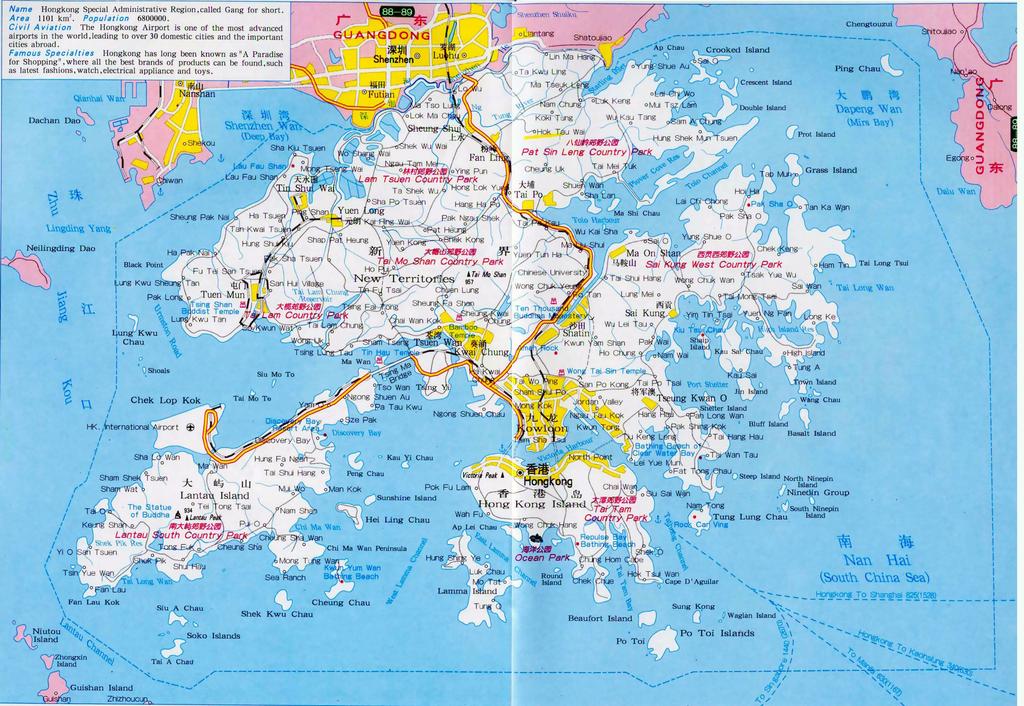
There was a documentary about Hong Kong on TV tonight, so I was curious how many people lived in the same small territory as Hong Kong in Paris, and then I also looked for Madrid and Barcelona. Here are the results.

Population in 2023 (land area):
- Hong Kong: 7,498,100 (1,114.4 km²)
- Paris: 8,428,800 (1,115.9 km²)
- Madrid: 5,129,600 (1,113.0 km²)
- Barcelona: 4,382,400 (1,112.2 km²)
As Muppet notes, most of Hong Kong isn’t developed. Hong Kong is incredibly hilly, with some points nearing up to 1,000m in height, so the population is concentrated along narrow coastal plains (with some land reclamation) and valley corridors. Most of the territory is a mixture of forest lined hills, uninhabited islands and agricultural land.

In theory you could urbanise the entire territory, but that is about as likely as reclaiming the entirety of the Upper Bay of New York.


Quote:
Originally Posted by MonkeyRonin View Post
Does that urban figure include the old villages on the islands and countryside? Either way, that would put Hong Kong's residential density around 42,000/sqkm (excluding the airport). Which looks & sounds like it'd be about right, especially considering that some neighbourhoods are north of 100,000/sqkm. Of course, also wouldn't be entirely fair to exclude airports, parks, and ports from Hong Kong and not from other cities.
The total developed land area in Hong Kong is 268km², or 24.1% of the entire land area. That includes every single building and structure, roads, railways, airports, utilities, open space, cemeteries, vacant land, etc… Source: From 2015, but I can’t imagine the numbers have changed much outside some minor reclamation: https://www.cedd.gov.hk/filemanager/eng/content_954/Info_Sheet2.pdf

774km² (69.7%) of Hong Kong is woodland, shrubland, grassland, reservoirs and other barren land. Another 68km² (6.1%) is agricultural land.

You can pretty much fit all of the developed residential (including the rural settlements), commercial and industrial space of Hong Kong into the 105km² of the City of Paris. Hong Kong of course has 7.5mn people and Paris 2mn.


It does ask the question, what is and isn’t part of a city to be counted? A lot of people reference just the land area, but is protected undeveloped forest or agricultural land any less or more of a part of a city than a body of water? Hong Kong is probably the most extreme example of this because of the geographical constraints on development, but other cities such as London have swathes of protected undeveloped land that are of statistical significance.


Quote:
Originally Posted by iheartthed View Post
New York puts up those London and Paris numbers in half the land area:
- New York City (2020): 8,804,190 (778.18 km²)
edit:
- NYC + Essex, Hudson, and Union in NJ: 10,968,117 (1,491 km²)
The area doesn’t exactly match, but going by your figures and Brisavoine, New York has experienced population loss of some 350,000?

I’m also surprised that London’s population is expanding (numerical and percentage terms) so much faster than Paris. Is French population growth mostly outside of Paris?
__________________
London Transport Thread updated: 2025-10-30 | London Stadium & Arena Thread updated: 2025-03-27
London General Update Thread updated: 2019-04-03 | High Speed 2 updated: 2025-10-06
Reply With Quote
     
     
  #1455  
Old Posted Yesterday, 4:23 PM
New Brisavoine New Brisavoine is offline
Registered User
 
Join Date: Nov 2007
Posts: 5,089
Quote:
Originally Posted by nito View Post
The area doesn’t exactly match, but going by your figures and Brisavoine, New York has experienced population loss of some 350,000?
No, New York expanded a lot between 2010 and 2020 (it is in the 2000s that it stagnated). I'll post the updated figures shortly.

Quote:
Originally Posted by nito View Post
I’m also surprised that London’s population is expanding (numerical and percentage terms) so much faster than Paris. Is French population growth mostly outside of Paris?
Yes, French growth is the exact opposite of British growth: in the UK, growth is concentrated in London, and the rest of the country either declines, stagnates, or grows only moderately. This was France's situation from 1850 to 1950 pretty much: 'Paris and the French desert' as a famous demographer complained in a seminal 1947 essay.

Since then, the French authorities have done all they could to contain Paris, and they have succeeded. Here again, we are the polar opposite of the UK. When Paris grew a lot and the rest of France stagnated (i.e. before 1950), the French authorities felt largely unconcerned, whereas in the UK the British authorities were doing their best to contain London (hence the Green Belt, and other strategies, new towns, etc).

The French authorities changed tack in the 1960s and decided to contain Paris and develop the rest of the country (selection of a few "equilibrium metropolises", large university campuses, industrial relocations, etc), and they have never reversed course. In the UK, there was a complete reversal in the 1990s 'Tony Blair years', when they decided to push and promote London in every possible way (based on this odd idea that only big metropolises can thrive in this modern global world) and abandon the rest of the country to its own poor fate.

So as a result, London renewed with high growth rates after the year 2000 (higher than 0.75% per year), while Paris keeps growing only thanks to its own momentum, and has been around +0.50% per year for the past 35 years.

In the rest of France, some regions are declining or stagnating (industrial north rustbelt, rural interior areas), but the "equilibrium metropolises" are booming, and the Atlantic coastal areas in general are also booming.

Between the 2012 and 2023 censuses (it's an 11-year period to account for 2020 when the yearly census didn't take place due to Covid), these were the yearly growth rates for the French metro areas:
- Geneva (French part of the metro area): +1.71% per year
- Montpellier: +1.41%
- Bordeaux : +1.36%
- Toulouse: +1.33%
- Nantes: +1.24%
- Rennes: +1.15%
- Lyon: +0.83%
- Strasbourg: +0.62%
- Nice: +0.55%
- Marseille: +0.50%
- Paris: +0.41%
- Lille: +0.37%
- Grenoble : +0.31%
- Rouen: +0.31%

Things may be about to change in the UK. On the one hand, London's growth since 2000 has been fueled by international immigration (native Britons actually flee London; a similar phenomenon takes place in Paris), but the British public has now become largely hostile to immigration, and with the rise of the Reform Party, the government has started to curtail immigration, so that will affect London's growth. And the 2nd factor is the new prime minister Andy Burnham, a man from the north who wants to end the chapter of history opened by Tony Blair, and rebalance the country, in particular by favoring Northern England. We'll see whether the government has really a long-term commitment to contain London and refocus growth on other more northerly areas, or whether it's a just a fling. There are still very powerful forces in the British media and elites who want to favor London and don't give a damn about the rest of the country, so I'm not certain that the rebalancing will really take place, but we'll see. Curtailing immigration will be more likely to hit London's growth than rebalancing the country.

In France, no change ahead expected. Governments will continue to contain Paris and favor the "equilibrium metropolises". And future governments could curtail immigration (if they become really serious about it), which would depress Paris's growth even more.

__________________
New Axa – New Brisavoine
Reply With Quote
     
     
  #1456  
Old Posted Yesterday, 7:16 PM
iheartthed iheartthed is offline
Registered User
 
Join Date: Oct 2009
Location: New York
Posts: 11,945
Quote:
Originally Posted by nito View Post
The area doesn’t exactly match, but going by your figures and Brisavoine, New York has experienced population loss of some 350,000?
The figure showing a population loss for NYC is coming from the ACS estimates, but it's anyone's guess as to whether those are accurate. Historically the ACS estimates have been unreliable for NYC. Considering that there are more housing units in NYC than there were in 2020, with not much softness in the rental market since 2020, it's hard for me to believe that the city has fewer people today.
Reply With Quote
     
     
End
 
 
Reply

Go Back   SkyscraperPage Forum > Discussion Forums > City Discussions
Forum Jump


Forum Jump


All times are GMT. The time now is 2:53 AM.

     
SkyscraperPage.com - Privacy Statement - Top

Powered by vBulletin® Version 3.8.7
Copyright ©2000 - 2026, vBulletin Solutions, Inc.