HomeDiagramsDatabaseMapsForum About
     

Go Back   SkyscraperPage Forum > Discussion Forums > City Discussions


Reply

 
Thread Tools Display Modes
     
     
  #1  
Old Posted May 17, 2026, 6:32 PM
Yuri's Avatar
Yuri Yuri is offline
Registered User
 
Join Date: Sep 2008
Posts: 6,147
Worldwide Public Transit Statistics

Public transit discussions here tend to be very metro-centric and also heavily focused on North America or often lost in the dead Transportation forum, so I thought it would be interesting to create another worldwide statistics thread.

The idea is to discuss and compare transit systems all over the world through ridership numbers, lenght rankings, and urban context. This can include: metros/subways, commuter rail, suburban rail, regional rail, trams/LRT, buses/BRT systems, everything.

I’ll start with the Wikipedia list of busiest metro systems in the world:

---------- System -- Stations - Lenght - Annual Ridership (millions)
Code:
Shanghai ---- Metro ------- 415 --- 890.0 km --- 3,773.8 (2024)
Beijing ----- Subway ------ 404 --- 891.1 km --- 3,621.3 (2024)
Guangzhou --- Metro ------- 317 --- 779.9 km --- 3,255.0 (2024)
Shenzhen ---- Metro ------- 332 --- 622.0 km --- 3,101.9 (2024)
Tokyo ------- Metro ------- 142 --- 195.1 km --- 2,496.8 (2024)
Seoul ------- Subway ------ 338 --- 358.5 km --- 2,403.0 (2022)
Delhi ------- Metro ------- 243 --- 375.9 km --- 2,358.0 (2025)
Moscow ------ Metro ------- 249 --- 535.3 km --- 2,288.5 (2023)
Chengdu ----- Metro ------- 363 --- 716.4 km --- 2,209.0 (2024)
New York ---- Subway ------ 424 --- 399.0 km --- 2,040.1 (2024)
Hong Kong --- MTR ---------- 99 --- 209.1 km --- 1,770.0 (2024)
Paris ------- Metro ------- 321 --- 245.6 km --- 1,475.5 (2024)
Hangzhou ---- Metro ------- 254 --- 516.2 km --- 1,469.8 (2024)
Wuhan ------- Metro ------- 289 --- 553.3 km --- 1,467.0 (2024)
Cairo ------- Metro -------- 84 --- 106.8 km --- 1,460.0 (2023)
Chongqing --- RT ---------- 286 --- 576.0 km --- 1,416.5 (2024)
Xi'an ------- Metro ------- 243 --- 422.2 km --- 1,406.4 (2024)
São Paulo --- Metro -------- 97 --- 111.1 km --- 1,265.0 (2025)
Singapore --- MRT --------- 143 --- 242.6 km --- 1,240.0 (2024)
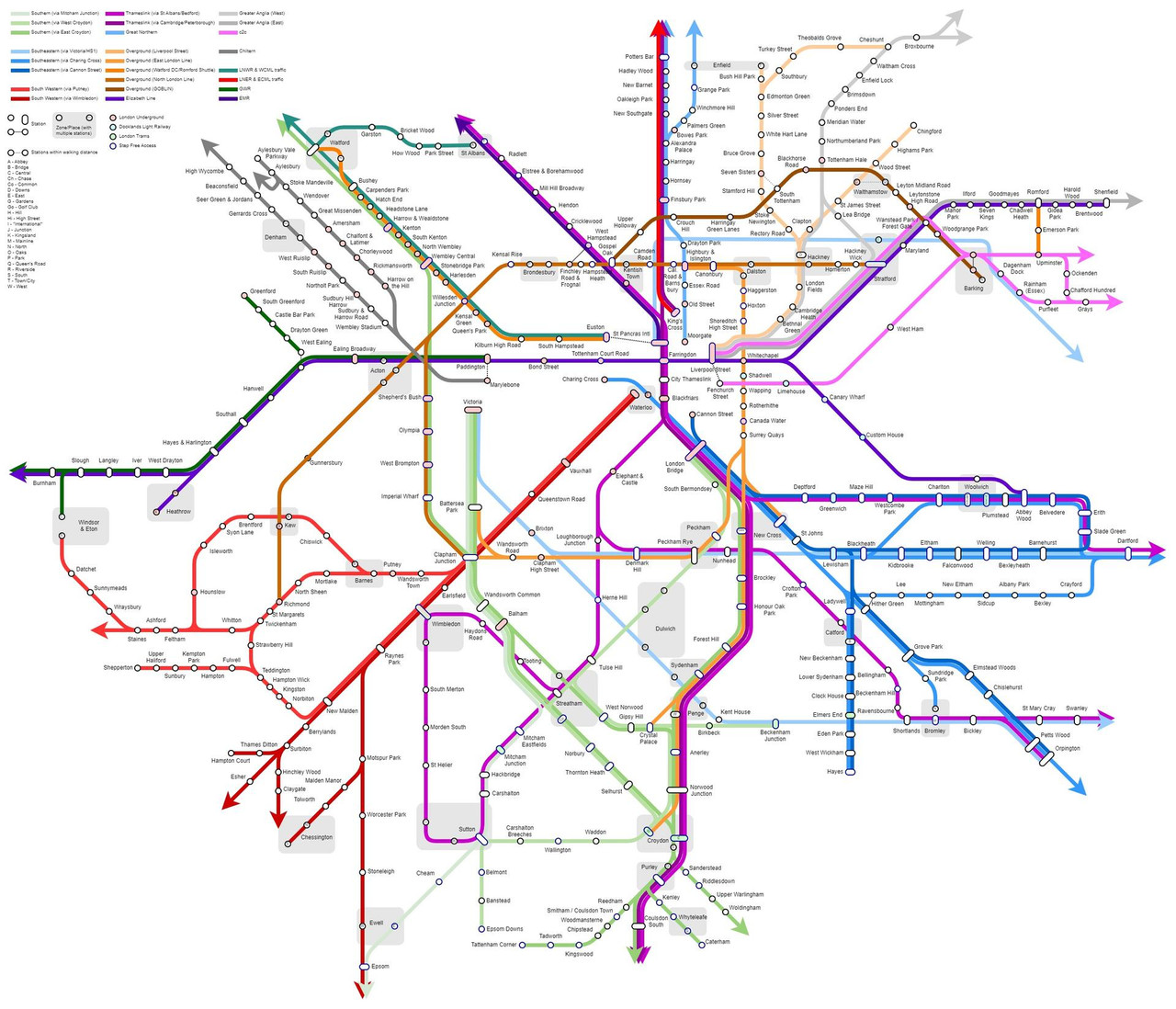
London ------ Underground - 272 --- 402.0 km --- 1,216.0 (2024)
14 in Asia (9 in China), 3 in Europe, 2 in Americas and 1 in Africa

However, “metro” can be a very arbitrary definition and often fails to capture the whole urban transit in most cities (e.g. Tokyo, Paris, São Paulo, etc.). Here a (non-exhaustive) table:

---------- System -- Stations - Lenght - Annual Ridership (millions)
Code:
Tokyo ------- Metro/TOEI/* --- 368 --- 452.3 km --- 4.087,4 (2024/2023)
Shanghai ---- Metro ---------- 415 --- 890.0 km --- 3,773.8 (2024)
Beijing ----- Subway --------- 404 --- 891.1 km --- 3,621.3 (2024)
Guangzhou --- Metro ---------- 317 --- 779.9 km --- 3,255.0 (2024)
Shenzhen ---- Metro ---------- 332 --- 622.0 km --- 3,101.9 (2024)
Seoul ------- Subway/DX ------ 354 --- 391.9 km --- 2,525.5 (2022/2019)
Paris ------- Metro/RER ------ 578 --- 847.6 km --- 2,458.5 (2024/2019)
Delhi ------- Metro ---------- 243 --- 375.9 km --- 2,358.0 (2025)
New York ---- Subway/PATH/**-- 873 - 2,176.7 km --- 2,344.6 (2024)
Moscow ------ Metro ---------- 249 --- 535.3 km --- 2,288.5 (2023)
Chengdu ----- Metro ---------- 363 --- 716.4 km --- 2,209.0 (2024)
São Paulo --- Metro/CPTM ----- 193 --- 392.1 km --- 1,988.7 (2025)
Hong Kong --- MTR ------------- 99 --- 209.1 km --- 1,770.0 (2024)
London ------ Underground/***  440 --- 731.0 km --- 1,738.2 (2024)
Hangzhou ---- Metro ---------- 254 --- 516.2 km --- 1,469.8 (2024)
Wuhan ------- Metro ---------- 289 --- 553.3 km --- 1,467.0 (2024)
Cairo ------- Metro ----------- 84 --- 106.8 km --- 1,460.0 (2023)
Chongqing --- RT ------------- 286 --- 576.0 km --- 1,416.5 (2024)
Xi'an ------- Metro ---------- 243 --- 422.2 km --- 1,406.4 (2024)
Singapore --- MRT ------------ 143 --- 242.6 km --- 1,240.0 (2024)
Osaka ------- Metro/**** ----- 186 --- 225.4 km --- 1,230.6 (2024)
Mexico City - Metro/Tren ----- 170 --- 227.9 km --- 1,217.0 (2024)
Nanjing ----- Metro ---------- 252 --- 627.5 km --- 1,093.5 (2024)
Changsha ---- Metro ---------- 140 --- 218.3 km --- 1,031.6 (2024)
Berlin ------ U-Bahn/S-Bahn -- 343 --- 495.6 km --- 1,010.3 (2024)
Madrid ------ U-Bahn/Cercanías 335 --- 666.4 km ----- 956.7 (2024)
* Rinkai, Yurikamome, Nippori-Toneri, Yokohama Subway, Minatomirai, Kanazawa Seaside, Saitama Rapid Railway, New Shuttle, Tōyō Rapid Railway
** Staten Island Railway, Long Island Rail Road, Metro-North Railroad, NJ Transit Rail
*** Overground, DLR, Elizabeth Line
**** Kyoto Subway, Kobe New Transit, Kyoto Subway


It's a collaborative thread, so feel free to post statistics, maps, rankings, operator data, historical trends or local insights from your cities and countries.
__________________
London - São Paulo - Rio de Janeiro - Londrina - Frankfurt
Reply With Quote
     
     
  #2  
Old Posted May 17, 2026, 6:54 PM
New Brisavoine New Brisavoine is online now
Registered User
 
Join Date: Nov 2007
Posts: 4,726
Quote:
Originally Posted by Yuri View Post
However, “metro” can be a very arbitrary definition and often fails to capture the whole urban transit in most cities (e.g. Tokyo, Paris, São Paulo, etc.). Here a (non-exhaustive) table:

---------- System -- Stations - Lenght - Annual Ridership (millions)
Code:
Tokyo ------- Metro/TOEI/* --- 368 --- 452.3 km --- 4.087,4 (2024/2023)
Shanghai ---- Metro ---------- 415 --- 890.0 km --- 3,773.8 (2024)
Beijing ----- Subway --------- 404 --- 891.1 km --- 3,621.3 (2024)
Guangzhou --- Metro ---------- 317 --- 779.9 km --- 3,255.0 (2024)
Shenzhen ---- Metro ---------- 332 --- 622.0 km --- 3,101.9 (2024)
Seoul ------- Subway/DX ------ 354 --- 391.9 km --- 2,525.5 (2022/2019)
Paris ------- Metro/RER ------ 578 --- 847.6 km --- 2,458.5 (2024/2019)
Delhi ------- Metro ---------- 243 --- 375.9 km --- 2,358.0 (2025)
New York ---- Subway/PATH/**-- 873 - 2,176.7 km --- 2,344.6 (2024)
Moscow ------ Metro ---------- 249 --- 535.3 km --- 2,288.5 (2023)
Chengdu ----- Metro ---------- 363 --- 716.4 km --- 2,209.0 (2024)
São Paulo --- Metro/CPTM ----- 193 --- 392.1 km --- 1,988.7 (2025)
Hong Kong --- MTR ------------- 99 --- 209.1 km --- 1,770.0 (2024)
London ------ Underground/***  440 --- 731.0 km --- 1,738.2 (2024)
Hangzhou ---- Metro ---------- 254 --- 516.2 km --- 1,469.8 (2024)
Wuhan ------- Metro ---------- 289 --- 553.3 km --- 1,467.0 (2024)
Cairo ------- Metro ----------- 84 --- 106.8 km --- 1,460.0 (2023)
Chongqing --- RT ------------- 286 --- 576.0 km --- 1,416.5 (2024)
Xi'an ------- Metro ---------- 243 --- 422.2 km --- 1,406.4 (2024)
Singapore --- MRT ------------ 143 --- 242.6 km --- 1,240.0 (2024)
Osaka ------- Metro/**** ----- 186 --- 225.4 km --- 1,230.6 (2024)
Mexico City - Metro/Tren ----- 170 --- 227.9 km --- 1,217.0 (2024)
Nanjing ----- Metro ---------- 252 --- 627.5 km --- 1,093.5 (2024)
Changsha ---- Metro ---------- 140 --- 218.3 km --- 1,031.6 (2024)
Berlin ------ U-Bahn/S-Bahn -- 343 --- 495.6 km --- 1,010.3 (2024)
Madrid ------ U-Bahn/Cercanías 335 --- 666.4 km ----- 956.7 (2024)
For Paris it's 3,222 million in 2024 (without including buses). If we include buses, then it's 4,417 million.
__________________
New Axa – New Brisavoine
Reply With Quote
     
     
  #3  
Old Posted May 17, 2026, 7:10 PM
Yuri's Avatar
Yuri Yuri is offline
Registered User
 
Join Date: Sep 2008
Posts: 6,147
Quote:
Originally Posted by New Brisavoine View Post
For Paris it's 3,222 million in 2024 (without including buses). If we include buses, then it's 4,417 million.
Japanese systems are so mind blowing that even Wikipedia's article (source 17) they stated that subways only represent a fraction of the whole system. Tokyo is at 14.6 billion (!!!), Osaka 4.7 billion and Nagoya 1.1 billion and that's rail only.

São Paulo (2025) is like this:

Metrô: 1.265 billion
CPTM: 723.7 million
Buses: 2.829 billion
TOTAL: 4.818 billion
__________________
London - São Paulo - Rio de Janeiro - Londrina - Frankfurt
Reply With Quote
     
     
  #4  
Old Posted May 17, 2026, 7:30 PM
Yuri's Avatar
Yuri Yuri is offline
Registered User
 
Join Date: Sep 2008
Posts: 6,147
I decided to check and São Paulo system (Metrô+CPTM) peaked in 2019 with 2.361 billion passengers over rail. It's slowly recovering: 1.883 billion (2023) 1.969 billion (2024) and 1.989 billion (2025).

As the new Line 17-Gold (monorail, 6.7 km, 8 stations) and Line 6 Orange (underground, 15.3 km, 15 stations) will be delivered this year, they will bring lots of new passengers to the system. Combined, they are expected to carry 250 million pax/year when in full operation, so São Paulo might surpass the 2019 record.

More details: https://pt.wikipedia.org/wiki/Metropolitano_de_S%C3%A3o_Paulo#Sistema
__________________
London - São Paulo - Rio de Janeiro - Londrina - Frankfurt
Reply With Quote
     
     
  #5  
Old Posted May 17, 2026, 8:13 PM
New Brisavoine New Brisavoine is online now
Registered User
 
Join Date: Nov 2007
Posts: 4,726
Paris has added the extension of RER E to La Défense, opened 2 years ago (the contrast between the white marble and tropical woods of the floors in the RER E extension, and the black tar floors in the old Métro is jarring...):

Video Link


And this Autumn they will start opening the first section of more than 160 km (100 miles) of new Métro lines under construction (lines 15, 16, 17, 18).


One station on the future line 15 has actually already opened to the public:

Video Link


And this is the first section that should open this Autumn, in an area still to be developed around the largest scientific campus of Paris (but of course the local Greens oppose the development of this area):

Video Link
__________________
New Axa – New Brisavoine
Reply With Quote
     
     
  #6  
Old Posted May 18, 2026, 5:36 AM
muppet's Avatar
muppet muppet is online now
if I sang out of tune
 
Join Date: Sep 2004
Location: London
Posts: 6,470
cool! There are also an additional 205 mainline train stations within Greater London (210 if you count the periphery still within the contiguous urban area, eg Slough), and have been my main form of commute for a decade now.
These don't include any standalone Overground or Elizabeth Line stations. The mainline network in London carries 440 million annually (once again not counting Overground or Elizabeth Line).


Last edited by muppet; May 21, 2026 at 5:53 AM.
Reply With Quote
     
     
  #7  
Old Posted May 18, 2026, 1:47 PM
Yuri's Avatar
Yuri Yuri is offline
Registered User
 
Join Date: Sep 2008
Posts: 6,147
Quote:
Originally Posted by muppet View Post
cool! There are also an additional 205 mainline train stations within Greater London (210 if you count the periphery still within the contiguous urban area, eg Slough), and have been my main form of commute for a decade now.
These don't include any standalone Overground or Elizabeth Line stations. The mainline network in London carries 440 million annually (once again not counting Overground or Elizabeth Line).
That would place London at 2.1 billion, between Chengdu and São Paulo.

What about buses? As São Paulo, I hear London has a very robust system. How many people they carry every year?
__________________
London - São Paulo - Rio de Janeiro - Londrina - Frankfurt
Reply With Quote
     
     
  #8  
Old Posted May 18, 2026, 2:57 PM
muppet's Avatar
muppet muppet is online now
if I sang out of tune
 
Join Date: Sep 2004
Location: London
Posts: 6,470
Bus ridership is 1.84 billion p/a, down from pre-pandemic peak of 2.4 billion.

In an attempt to get numbers up again, the mayor's just imposed an unlimited fare system on weekends - for the price of just one ticket you can catch as many as you want as far as you want.

The problem is the drivers imo, who have made the journeys very unpredictable. They game it so they get off work at the right place and time. Bus journeys have deteriorated in times, because they purposefully catch the traffic despite the bus lanes, go as slow as possible to catch red lights etc, pause for 5 minutes 'to regulate the service' even before the last stop, or the change of driver at the next one, or the upcoming traffic jams at the bridge.

Last edited by muppet; May 18, 2026 at 3:50 PM.
Reply With Quote
     
     
  #9  
Old Posted May 18, 2026, 6:13 PM
Yuri's Avatar
Yuri Yuri is offline
Registered User
 
Join Date: Sep 2008
Posts: 6,147
Brazil

--------------------------------------- System ---------- Stations --- Lenght - Annual Ridership (millions) - Population (millions)
Code:
São Paulo --------- Metrô/CPTM ----- 193 -- 392.1 km -- 1,988.7 --- 18.79
Rio de Janeiro ---- Metrô/Trem/LRT - 175 -- 285.9 km ---- 322.1 --- 10.35
Salvador ---------- Metrô ----------- 21 --- 34.4 km ---- 117.6 ---- 2.79
Recife ------------ Metrô/LRT ------- 36 --- 71.4 km ----- 44.2 ---- 2.65
Brasília ---------- Metrô ----------- 27 --- 42.4 km ----- 42.5 ---- 2.98
Porto Alegre ------ Metrô ----------- 23 --- 43.8 km ----- 31.7 ---- 2.45
Belo Horizonte ---- Metrô ----------- 19 --- 28.1 km ----- 26.2 ---- 3.06
Fortaleza --------- Metrô ----------- 41 --- 56.9 km ----- 15.1 ---- 2.95
Santos ------------ LRT ------------- 15 --- 11.5 km ------ 8.1 ---- 0.77
Natal ------------- Trem ------------ 28 --- 79.4 km ------ 1.5 ---- 1.29
Teresina ---------- Metrô ----------- 12 --- 16.0 km ------ 1.3 ---- 0.90
Sobral ------------ LRT ------------- 12 --- 12.5 km ------ 1.1 ---- 0.21
João Pessoa ------- Trem ------------ 13 --- 30.0 km ------ 0.8 ---- 1.20
Juazeiro do Norte - LRT -------------- 9 --- 13.6 km ------ 0.5 ---- 0.44
Maceió ------------ Trem ------------ 15 --- 34.4 km ------ 0.4 ---- 1.12
* São Paulo (2025), Porto Alegre I kept 2023 numbers as the system was shot down for months due 2024 floods and all the rest is 2024 (ANP Yearbook);
** Population refers to the municipalities served by the tracks only, not for the whole metro area


- It's interesting how public transit ridership is exponential. 76% of ridership comes from São Paulo metro area, carrying 6x more passengers than Rio de Janeiro.

- Salvador's subway opened in 2014, with two lines (with a station at the airport) and it's now, by far, the 3rd best system. And next year they'll add a big LRT system, with 36 km, 34 stations that is expected to carry 36 million passengers/year.

More: https://pt.wikipedia.org/wiki/Lista_de_sistemas_ferrovi%C3%A1rios_urbanos_no_Brasil
__________________
London - São Paulo - Rio de Janeiro - Londrina - Frankfurt
Reply With Quote
     
     
  #10  
Old Posted May 18, 2026, 9:24 PM
New Brisavoine New Brisavoine is online now
Registered User
 
Join Date: Nov 2007
Posts: 4,726
Quote:
Originally Posted by Yuri View Post
Brazil

--------------------------------------- System ---------- Stations --- Lenght - Annual Ridership (millions) - Population (millions)
Code:
São Paulo --------- Metrô/CPTM ----- 193 -- 392.1 km -- 1,988.7 --- 18.79
Rio de Janeiro ---- Metrô/Trem/LRT - 175 -- 285.9 km ---- 322.1 --- 10.35
Salvador ---------- Metrô ----------- 21 --- 34.4 km ---- 117.6 ---- 2.79
Recife ------------ Metrô/LRT ------- 36 --- 71.4 km ----- 44.2 ---- 2.65
Brasília ---------- Metrô ----------- 27 --- 42.4 km ----- 42.5 ---- 2.98
Porto Alegre ------ Metrô ----------- 23 --- 43.8 km ----- 31.7 ---- 2.45
Belo Horizonte ---- Metrô ----------- 19 --- 28.1 km ----- 26.2 ---- 3.06
Fortaleza --------- Metrô ----------- 41 --- 56.9 km ----- 15.1 ---- 2.95
Santos ------------ LRT ------------- 15 --- 11.5 km ------ 8.1 ---- 0.77
Natal ------------- Trem ------------ 28 --- 79.4 km ------ 1.5 ---- 1.29
Teresina ---------- Metrô ----------- 12 --- 16.0 km ------ 1.3 ---- 0.90
Sobral ------------ LRT ------------- 12 --- 12.5 km ------ 1.1 ---- 0.21
João Pessoa ------- Trem ------------ 13 --- 30.0 km ------ 0.8 ---- 1.20
Juazeiro do Norte - LRT -------------- 9 --- 13.6 km ------ 0.5 ---- 0.44
Maceió ------------ Trem ------------ 15 --- 34.4 km ------ 0.4 ---- 1.12
* São Paulo (2025), Porto Alegre I kept 2023 numbers as the system was shot down for months due 2024 floods and all the rest is 2024 (ANP Yearbook);
** Population refers to the municipalities served by the tracks only, not for the whole metro area


- It's interesting how public transit ridership is exponential. 76% of ridership comes from São Paulo metro area, carrying 6x more passengers than Rio de Janeiro.

- Salvador's subway opened in 2014, with two lines (with a station at the airport) and it's now, by far, the 3rd best system. And next year they'll add a big LRT system, with 36 km, 34 stations that is expected to carry 36 million passengers/year.

More: https://pt.wikipedia.org/wiki/Lista_de_sistemas_ferrovi%C3%A1rios_urbanos_no_Brasil
Toulouse had 118.3 million ridership in their two Métro lines in 2024. And they are currently building the 3rd line, which will be longer and with larger trains than the two current lines.

Video Link


It's a fully-automated, driverless, high frequency Métro. There's one train every 60 seconds. That's higher than the frequency in Paris (which is 120 seconds at best). And because it's driverless, it's rarely stopped due to strikes. Also, it's much cleaner than the Métro in Paris, and tramps/vagrants cannot enter the Métro because there are guards at each entrance of the Métro, unlike in Paris where everybody can enter the Métro unchecked.

Video Link
__________________
New Axa – New Brisavoine
Reply With Quote
     
     
  #11  
Old Posted May 31, 2026, 4:29 PM
Yuri's Avatar
Yuri Yuri is offline
Registered User
 
Join Date: Sep 2008
Posts: 6,147
Bringing Germany:

---------- System -- Stations - Lenght - Annual Ridership (millions)
Code:
Berlin ------- U-Bahn/S-Bahn ----- 343 --- 495.6 km --- 1,010.3
München ------ U-Bahn/S-Bahn ----- 246 --- 529.0 km ----- 722.0
Hamburg ------ U-Bahn/S-Bahn ----- 161 --- 253.4 km ----- 504.4
Frankfurt ---- U-Bahn/S-Bahn ----- 198 --- 367.9 km ----- 273.6
Köln --------- Stadtbahn --------- 236 --- 199.0 km ----- 236.2
Düsseldorf --- Stadtbahn --------- 166 ---- 98.7 km ----- 173.0
Nürnberg ----- U-Bahn/S-Bahn ----- 142 --- 372.4 km ----- 147.4
Rhein-Ruhr --- S-Bahn ------------ 181 --- 475.0 km ----- 130.0
A very unique place: here the exponential density of transit doesn't apply. It's all proportional showing how well served the smaller cities are.

Munich is mind-blowing: a 2.5 million people metro area and rivals the transit famous Berlin.
__________________
London - São Paulo - Rio de Janeiro - Londrina - Frankfurt
Reply With Quote
     
     
  #12  
Old Posted May 31, 2026, 4:36 PM
isaidso isaidso is offline
North of Gilead
 
Join Date: Dec 2008
Location: North of Gilead
Posts: 11,051
I'm always surprised how far down the list Toronto falls when it comes to metro system ridership but it bears mentioning that the Toronto Transit Commission only had jurisdiction over the City of Toronto. Up until 1998, the City of Toronto was a fairly small municipality of 650,000 people.

In 1998, the City of Toronto amalgamated with 5 neighbouring municipalities. It will take a long time to build out the whole system beyond the Old City of Toronto boundaries so North York, Etobicoke, York, East York and Scarborough become properly served. That said, metro system ridership for the TTC should soar over the coming decades with the construction of the Ontario Line and other expansions.
__________________
ELBOWS UP CANADA, ELBOWS UP UKRAINE, ELBOWS UP GREENLAND
CANADA, EUROPE, NZ, AUSTRALIA, JAPAN, MEXICO STRONG

US REPUBLICANS/MAGA/ICE NOT WELCOME HERE, STAY OUT
Reply With Quote
     
     
  #13  
Old Posted May 31, 2026, 8:41 PM
Northern Light Northern Light is online now
Registered User
 
Join Date: Jul 2009
Location: Toronto
Posts: 2,054
Quote:
Originally Posted by isaidso View Post
I'm always surprised how far down the list Toronto falls when it comes to metro system ridership but it bears mentioning that the Toronto Transit Commission only had jurisdiction over the City of Toronto. Up until 1998, the City of Toronto was a fairly small municipality of 650,000 people.
This is not correct. The TTC, prior to amalgamation, was under the jurisdiction of Metro Toronto, the regional government which covered the same boundaries as the amalgamated city.

Now, the regional area, depending on which one you wish to use (Greater Toronto Area, Greater Toronto and Hamilton Area, or Greater Golden Horseshoe) has multiple other transit authorities, and is also served the commuter agency GO Transit.

Quote:
Scarborough become properly served. That said, metro system ridership for the TTC should soar over the coming decades with the construction of the Ontario Line and other expansions.
Scarborough has good bus service in most major corridors, but is currently served by only 3 subway station, with 3 more under construction.

(Approx. population 700,000).

A new subway is contemplated along Sheppard, which will add (in Scarborough), at least 5 more stations, and maybe as many 10 depending on the exact length/route chosen.

The TTC has strong potential for more ridership, but has been stymied by (until recently) low gas prices, some reliability issues (a few major service interruptions), and perceived safety issues, largely around the number of homeless and/or mentally unstable people on the system. (for clarity, the system is still quite safe, but the apparent 'disorder' at elevated levels does get to some people.

Also harming growth has been anemically slow streetcar operations and buses with bloated schedules resulting in slower and sometimes less frequent service.
__________________
An environmentally conscientious, libertarian inclined, fiscally conservative, socialist.
Reply With Quote
     
     
  #14  
Old Posted Jun 2, 2026, 5:29 AM
MonkeyRonin's Avatar
MonkeyRonin MonkeyRonin is online now
¥ ¥ ¥
 
Join Date: Sep 2006
Location: Vancouver
Posts: 10,591
Quote:
Originally Posted by isaidso View Post
I'm always surprised how far down the list Toronto falls when it comes to metro system ridership but it bears mentioning that the Toronto Transit Commission only had jurisdiction over the City of Toronto. Up until 1998, the City of Toronto was a fairly small municipality of 650,000 people.

In fairness, the Toronto subway has the third highest ridership of North American metro systems (after NYC and Mexico City), and given its relatively low system length of 100km it kinda "punches above its weight" relative to its peers. Of course, its ridership is still much lower than similarly-sized European or Asian cities with more extensive metro systems.

As Northern Light noted, the TTC has been serving the present-day city of Toronto since its inception as Metro Toronto in 1953. That all said, there is also an argument to made that the modern-day GTA would be better served if the TTC, GO (3rd largest commuter rail operator in NA), and all of the various suburban transit operators (YRT, MiWay, etc) were wrapped under one umbrella with a mandate to provide more transit more seamlessly across the region.
__________________
Reply With Quote
     
     
  #15  
Old Posted Jun 2, 2026, 11:25 AM
Crawford Crawford is online now
Registered User
 
Join Date: Nov 2003
Location: Brooklyn, NYC/Polanco, DF
Posts: 34,685
Quote:
Originally Posted by Yuri View Post
Bringing Germany:

---------- System -- Stations - Lenght - Annual Ridership (millions)
Code:
Berlin ------- U-Bahn/S-Bahn ----- 343 --- 495.6 km --- 1,010.3
München ------ U-Bahn/S-Bahn ----- 246 --- 529.0 km ----- 722.0
Hamburg ------ U-Bahn/S-Bahn ----- 161 --- 253.4 km ----- 504.4
Frankfurt ---- U-Bahn/S-Bahn ----- 198 --- 367.9 km ----- 273.6
Köln --------- Stadtbahn --------- 236 --- 199.0 km ----- 236.2
Düsseldorf --- Stadtbahn --------- 166 ---- 98.7 km ----- 173.0
Nürnberg ----- U-Bahn/S-Bahn ----- 142 --- 372.4 km ----- 147.4
Rhein-Ruhr --- S-Bahn ------------ 181 --- 475.0 km ----- 130.0
A very unique place: here the exponential density of transit doesn't apply. It's all proportional showing how well served the smaller cities are.

Munich is mind-blowing: a 2.5 million people metro area and rivals the transit famous Berlin.
Keep in mind that German transit doesn't use heavy rail/light rail distinctions. There are only four heavy rail systems - Berlin, Munich, Hamburg and Nürnberg. The remainder of U-Bahn systems are light rail. In the 1970's Germany spent vast sums building core tunnels for basically all its metropolitan light rail networks. Germany also spent vast sums tunneling commuter rail.

S-Bahn are commuter rail and run by Deutsche Bahn, so you're conflating different systems. Granted, they're very well integrated but this is like taking Muni, BART and Amtrak ridership as a singular metropolitan rail system.

And there is no real difference between U-Bahn and Stadtbahn. They're just interchangeable terms describing some sort of rail, which may be "subway" or may be upgraded light rail.
Reply With Quote
     
     
  #16  
Old Posted Jun 2, 2026, 1:59 PM
Yuri's Avatar
Yuri Yuri is offline
Registered User
 
Join Date: Sep 2008
Posts: 6,147
Yeah, the point of those rankings is to eliminate those distinctions as they are incredibly arbitrary and change from place to place.
__________________
London - São Paulo - Rio de Janeiro - Londrina - Frankfurt
Reply With Quote
     
     
  #17  
Old Posted Jun 2, 2026, 4:17 PM
UrbanImpact's Avatar
UrbanImpact UrbanImpact is online now
Registered User
 
Join Date: Jul 2002
Location: Fort Lauderdale, FL
Posts: 1,849
Quote:
Originally Posted by Crawford View Post
Keep in mind that German transit doesn't use heavy rail/light rail distinctions. There are only four heavy rail systems - Berlin, Munich, Hamburg and Nürnberg. The remainder of U-Bahn systems are light rail. In the 1970's Germany spent vast sums building core tunnels for basically all its metropolitan light rail networks. Germany also spent vast sums tunneling commuter rail.

S-Bahn are commuter rail and run by Deutsche Bahn, so you're conflating different systems. Granted, they're very well integrated but this is like taking Muni, BART and Amtrak ridership as a singular metropolitan rail system.

And there is no real difference between U-Bahn and Stadtbahn. They're just interchangeable terms describing some sort of rail, which may be "subway" or may be upgraded light rail.
What is the Wuppertal Schwebebahn considered?
Reply With Quote
     
     
  #18  
Old Posted Jun 2, 2026, 7:43 PM
Yuri's Avatar
Yuri Yuri is offline
Registered User
 
Join Date: Sep 2008
Posts: 6,147
Quote:
Originally Posted by UrbanImpact View Post
What is the Wuppertal Schwebebahn considered?
No: https://en.wikipedia.org/wiki/Rapid_transit_in_Germany#Systems
__________________
London - São Paulo - Rio de Janeiro - Londrina - Frankfurt
Reply With Quote
     
     
  #19  
Old Posted Jun 2, 2026, 11:34 PM
MonkeyRonin's Avatar
MonkeyRonin MonkeyRonin is online now
¥ ¥ ¥
 
Join Date: Sep 2006
Location: Vancouver
Posts: 10,591

I don't see why not - it's a fully grade-separated, electrified, high-capacity, high-frequency rail line. It's a small system (single 13km line), but fits the definition of rapid transit.
__________________
Reply With Quote
     
     
  #20  
Old Posted Jun 3, 2026, 6:09 AM
Minato Ku's Avatar
Minato Ku Minato Ku is offline
Tokyo and Paris fan
 
Join Date: Jul 2006
Location: Paris, Montrouge
Posts: 4,304
New York subway ridership count unlinked trips. Passengers doing transfers between subway lines are counted twice. It's the same for many other US network.
For comparison Paris métro or London underground ridership just count passengers entering in the network. Passengers transferring lines are not counted twice.
The real ridership of New York subway in 2024 was 1,195 million in 2024 when using using the same calculus method.

https://www.mta.info/agency/new-york-city-transit/subway-bus-ridership-2024
Reply With Quote
     
     
This discussion thread continues

Use the page links to the lower-right to go to the next page for additional posts
 
 
Reply

Go Back   SkyscraperPage Forum > Discussion Forums > City Discussions
Forum Jump


Forum Jump


All times are GMT. The time now is 4:08 PM.

     
SkyscraperPage.com - Privacy Statement - Top

Powered by vBulletin® Version 3.8.7
Copyright ©2000 - 2026, vBulletin Solutions, Inc.