I spent the last week of July in Brittany, to see some of my relatives.
Got plenty of pics to post to this thread, starting off by Fougères where there's this medieval fortress, that's known as one of the most impressive in the country.

So, let's set the medieval ruin atmosphere on.
• Video Link
We parked the car in this street of the upper part of town that sits on top of a hill.

I was a bit surprised to see parking was free. Of course, I wouldn't tell their mayors, but honestly, parking doesn't seem too expensive to me on average in that region, something like €2.50 per hour. That's fair, especially when their towns and villages are usually well maintained.
Paying shouldn't bother anybody as long as money is actually useful to something good.
Going down to the fortress through a garden on the hillside.


Somebody lost their cat in the garden.


Crossing the village at the bottom of the hill.

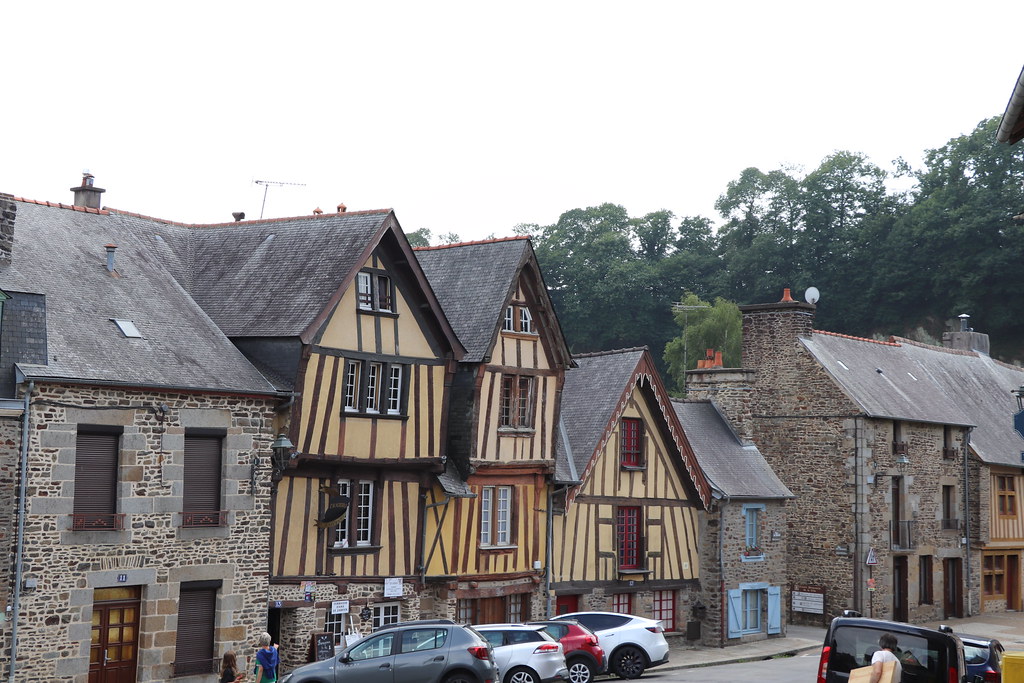
They often like to preserve old washing places in villages in France, like this.


Up there is the commanding church by which the car is parked.


This is it.

They call it a château (a castle), but military fortress may be more accurate, even though some people actually lived in there at times, in the Middle Ages.

Today's site was built from the 12th to 15th century to defend the northeast border of the Duchy of Brittany from attacks by the Frankish / French and English crowns.
I believe at first, there was a wooden fort, that turned out too primitive and was completely destroyed. By the end of the Early Middle Ages (which was quite decadent), as of the 11th century, construction methods grew much better again. So they eventually started to build something made of solid stone.
Fougères became a significant trade spot and a thriving town in the High Middle Ages. It aroused envy, then many gruesome battles took place there. They had to enhance the fortress over the time, which makes a remarkable compilation of medieval military architecture of it. You're going to see in pictures below.
This is part of the walls, still outside the fortress by the moat.

I don't know what it is. Maybe something to grind grain...
Yes, it's a water mill that was restored in 2013, still actually works.
Over there is the entrance to the fortress.

I'll let you see a bit of the close surroundings before getting in.
There are restaurants where we had lunch.


My apologies to foodies, I forget to take food in pics.
You definitely want to have a
galette de sarrasin as the main course and a crêpe for desert. That's what I did.
They have big crêpes full of cream and melted chocolate with a fried banana in.


There's the entrance.

The pretty girl reading a book at the left bottom corner of the pic is a student on a summer job. She has to check on tickets.
Something like €10 per adult, free to little kids under 6, according to the website.
It's a good deal.
This is the first courtyard you get in.

If I recall correctly, that square tower in the middle was the earliest, first to get built.
Later, military tacticians realized that angular towers weren't so convenient to archers, so towers that were added subsequently are all cylinders.

The inside of the fortress was split into several courtyards. For example, when the frontyard would be taken by the enemy, defenders still could find shelter elsewhere, much like they do in battles in the Lord of the Rings.

I'll tell you what, once you're in there, the one thing you want to do is to go upstairs, walk on walls and get in towers.

All walls and towers are open to the public.


Ruins in the central yard were residential buildings, where people actually lived.
I guess their walls weren't as thick as those of structures whose purpose was strictly defensive, so there's nothing much left of them.


I don't have any tripod to take indoor pictures (I know, I should get one when it's not even expensive), still managed to take this ceiling inside one of the towers.

I think there was a screen to watch a documentary with combat reenactments in that room.
At the entrance, you also get a device to listen to history and explanations as you progress in your visit.

There's a couple of replicas of 12th- or 13th-century catapults.
They probably studied some sort of rudimentary balistics back then yet.


If I'm not mistaken, those 2 were the last towers added to the site, that was in the 15th century.

Yeah, these. They'd be nicknamed "Françoise" and "Tourasse".

This is what it feels like in there.

So you'd rather go up to the roofs to enjoy views.


I think that's enough, wouldn't like the thread to feel overly redundant.
Back to the spot we'd left the car on.

Thanks for viewing!




 Prev
Prev


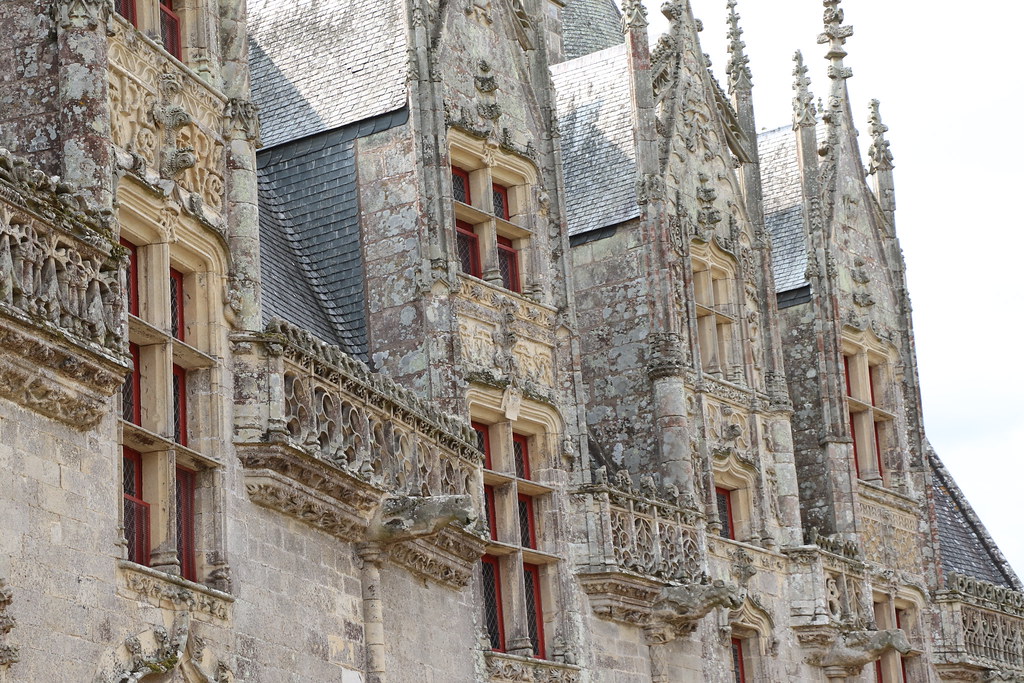





 Didn't recall so many wood/plaster houses in Brittany, in my memories it was always nearly all stone over there.





 Linear Mode
