HomeDiagramsDatabaseMapsForum About
     

Go Back   SkyscraperPage Forum > Global Projects & Construction > General Development


Closed Thread

 
Thread Tools Display Modes
     
     
  #50801  
Old Posted Jun 24, 2022, 4:59 PM
marothisu marothisu is offline
Registered User
 
Join Date: Dec 2012
Location: Chicago
Posts: 6,931
Quote:
Originally Posted by OrdoSeclorum View Post
Intentionally hamstringing development in areas close to jobs and attractive amenities like the Red Line and the Lake in hopes that in-fill will eventually sprawl to Blue Island is nuts. I'm glad you're not in charge.

If someone is considering moving to Chicago--and LOTS of people have been--and they would like to live in Lakeview but cannot because its illegal to build apartments there, they aren't going to end up in Roseland as an alternative. They will simply move someplace that has units available in a walkable neighborhood somewhere else. Or they will give up on urbanity and move to Atlanta.
If anything, it would increase denser development opportunities in areas like Bronzeville or even ones like North or South Lawndale as well as the NW side as opportunities to build in areas like Lincoln Park, Lakeview, etc have been waning. Most people who live in cities want as small and simple of of a commute as possible so yeah, I don't think people are going to magically start building in Roseland these types of places.

When I lived in NYC I did see some of this happening but typically it was a spreading effect, not an island effect. And usually if it was an island it usually wasn't too far from the spread where it would reach that place anyway a few years later.
__________________
Chicago Maps:
* New Construction https://www.google.com/maps/d/viewer?mid=19ua8oOEGHpKbeVJTREPhqG1PLB0&usp=sharing
     
     
  #50802  
Old Posted Jun 24, 2022, 5:10 PM
VivaLFuego's Avatar
VivaLFuego VivaLFuego is offline
Registered User
 
Join Date: Feb 2005
Location: Blue Island
Posts: 6,509
Quote:
Originally Posted by OrdoSeclorum View Post
Writing laws so that neighborhoods close to the core need to have more parking than necessary and so that buildings need to have fewer homes than nearby infrastructure can support is folly. "Let's make Ukrainian Village worse on purpose in hopes people will be forced to move far from their jobs in the West Loop."

Intentionally hamstringing development in areas close to jobs and attractive amenities like the Red Line and the Lake in hopes that in-fill will eventually sprawl to Blue Island is nuts. I'm glad you're not in charge.

If someone is considering moving to Chicago--and LOTS of people have been--and they would like to live in Lakeview but cannot because its illegal to build apartments there, they aren't going to end up in Roseland as an alternative. They will simply move someplace that has units available in a walkable neighborhood somewhere else. Or they will give up on urbanity and move to Atlanta.
TLDR Translation: F the south side.

Why would anyone ever want to move there.... and by choice?! Why, it's far from all the jobs! (The jobs which we encouraged to move to West Loop, despite the East Loop and underdeveloped South Loop having better access to the South Side that we supposedly care about. )

And by extension, why would anyone who lives out in the uninhabitable southerly wards be inclined to invest any of their own money or time to improve their properties, when city policy is stacked against it?

I am pro-reduction in parking minimums, no question or doubts there. But the south side has miles, and miles, and miles, of existing underutilized infrastructure because people won't live there, and why would they when there is an ever increasing supply of housing elsewhere? North and Northwest side infrastructure is quite well utilized, and if anything further development is requiring infrastructure capacity expansion there, while utilization of existing capacity continues declining to the south.

How is any of what I'm saying "making Ukrainian Village worse"? I am saying it should become more expensive so as to raise land values and demand in disinvested neighborhoods. I'm not saying Lakeview should have apartments torn down. I even support restricting the "deconversions" of 3-flats to mansions. I'm just saying, don't build thousands and thousands of new apartments.

I don't think people who spend their lives in the Green Zone understand just how vast, overwhelming even, the disinvestment issue is in the south side and south suburbs and what low, stagnant, and declining property values do to neighborhoods. Why bother fixing up or maintaining a property that's of marginal value anyway due to low demand? Why bother devoting time and money to improving your community when so few others devote theirs, because there's no incentive to do so?

To the extent there is any "affordable housing problem" in Chicago, that problem has nothing to do development limits or land rents, so I don't see why we would be copying California or New York strategies. And again, our North and Northwest side infrastructure is hardly underutilized. By all means the entire region has a stake in a vibrant downtown core, but how does adding another couple thousand people to Ukie Village help?

     
     
  #50803  
Old Posted Jun 24, 2022, 5:29 PM
galleyfox galleyfox is offline
Registered User
 
Join Date: Dec 2018
Posts: 1,159
Quote:
Originally Posted by VivaLFuego View Post
The old me would have been excited about this TOD ordinance, but my hot take since moving far south:

This all sounds like yet another good way to tell the South Side to go F itself.

In a city and region that is not growing, any *significant* increase in density in one sub-region means fewer households in another, with the resulting shifts in demand curves and rents falling below economical maintenance levels: i.e. furthers neighborhood death spirals or tips marginal neighborhoods into decline. Once again, Chicago progressives are copying policy and parameters from the coasts to advance the opposite of their stated outcomes.
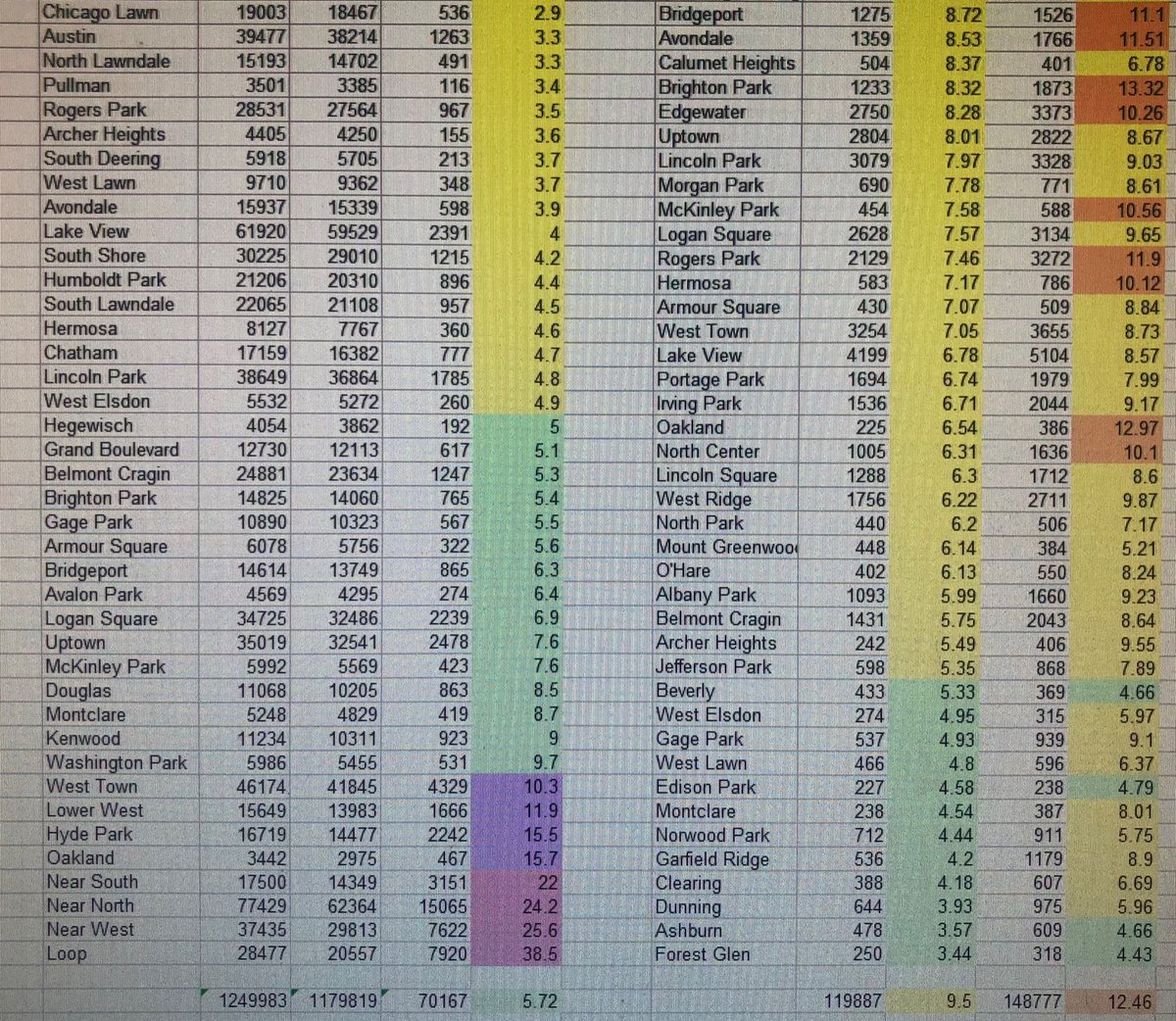
Have you seen the city housing and rental market lately?

At the peak of the pandemic right when the 2020 census was completed, the city had an average unit vacancy of about 9.5%, down from about 12.5% during the Financial Crisis.

Rental vacancy across the entire city is now just Five Percent and going down. The only vacant units available in the city are the ones that need expensive gut rehabs.

But I’m skeptical that any TOD ordinance is going to wreck the burgeoning black middle and professional class SFH market on the South Lakefront, or the first-time homeowner Hispanics on the SW side.

Those are completely different markets.


  #50804  
Old Posted Jun 24, 2022, 5:31 PM
VivaLFuego's Avatar
VivaLFuego VivaLFuego is offline
Registered User
 
Join Date: Feb 2005
Location: Blue Island
Posts: 6,509
Quote:
Originally Posted by marothisu View Post
If anything, it would increase denser development opportunities in areas like Bronzeville or even ones like North or South Lawndale as well as the NW side as opportunities to build in areas like Lincoln Park, Lakeview, etc have been waning. Most people who live in cities want as small and simple of of a commute as possible so yeah, I don't think people are going to magically start building in Roseland these types of places.

When I lived in NYC I did see some of this happening but typically it was a spreading effect, not an island effect. And usually if it was an island it usually wasn't too far from the spread where it would reach that place anyway a few years later.
Citing Roseland or Riverdale is a bit of a red herring. But Back of the Yards, Chatham, North Lawndale etc. would not be. And again, if those had more investment, the areas adjacent to them would in turn be improved, and so on. Yes, it's a spreading effect, and that effect is cut off at the knees with infinite development allowed to the North and Northwest, given stagnant to declining household and population counts in the broader region.

Englewood's transportation access is outstanding, but land values will never increase to support development and rehab if it's an easily avoidable location because any and all demand can be accommodated elsewhere. Park Manor, Chatham, and South Shore have outstanding building stock and the potential for some very nice commercial districts, if only there were demand to invest in commercial buildings and enterprises, and in turn, if only the aggregate disposable income in those areas weren't stagnant or outright declining.

Ordo's contention that someone would just move to Atlanta because a particular apartment in Lakeview or Ukrainian Village cost $50-100/month more than at present is kind of odd, and it's not how a regional real estate market works with hundreds of thousands of distinct households bidding and sorting between hundreds of thousands of distinct housing units over time.
     
     
  #50805  
Old Posted Jun 24, 2022, 5:33 PM
OrdoSeclorum OrdoSeclorum is offline
Registered User
 
Join Date: Mar 2010
Posts: 588
Quote:
Originally Posted by VivaLFuego View Post

How is any of what I'm saying "making Ukrainian Village worse"? I am saying it should become more expensive
Passing laws to make attractive parts of Chicago hard to live in was designed to keep lower income people and minorities out of those neighborhoods. By pricing them out of homes close to city center and attractive amenities via single family zoning, parking minimums, banning studio apartments, minimum lot sizes--all of that was done to make it difficult for poor people to live in a walkable, convenient part of cities.

The laws designed to make land expensive to price out poor people are bad. Making laws so that land is artificially expensive so that we force people to live somewhere they don't want to is bad. We should let cities grow in the way that they want to. Just about every great urban space happened because we just let people build stuff.

If the places that are currently zoned just for single family homes stay that way, sure, some people might be priced out and will sprawl to Roseland or even end up driving into the city from Indiana or taking the train from Kenosha. I would rather have those people walking and biking in the home they prefer to live in.

If Chicago becomes a more affordable, more pleasant place to live because we stop making it illegal to build nice places, then more graduates from Iowa and Buffalo and Colorado will move here. Then more employers will move here and the increase in jobs will drive more construction employment and service employment and school enrollment and a virtuous cycle will eventually lead to a bustling South Side once again. But this only happens if we allow the most attractive parts of Chicago to remain relatively affordable and accessible.
     
     
  #50806  
Old Posted Jun 24, 2022, 5:46 PM
galleyfox galleyfox is offline
Registered User
 
Join Date: Dec 2018
Posts: 1,159
Quote:
Originally Posted by OrdoSeclorum View Post

If Chicago becomes a more affordable, more pleasant place to live because we stop making it illegal to build nice places, then more graduates from Iowa and Buffalo and Colorado will move here. Then more employers will move here and the increase in jobs will drive more construction employment and service employment and school enrollment and a virtuous cycle will eventually lead to a bustling South Side once again. But this only happens if we allow the most attractive parts of Chicago to remain relatively affordable and accessible.
I think it’s a mistake to assume that people just stay within one neighborhood during their time in a city. 5 years ago, I was renting a flat in Ukrainian Village.

Today, I own a decent sized house in South Chicago (since other family members from Florida needed a place to stay by me)

Few would ever recommend someone from out-of-town to rent or buy a South side residence right off the bat. I wouldn’t recommended Rogers Park or Jefferson Park for that matter either. It’s a no-brainer to start with a ToD rental as close to the Loop as possible, and see which neighborhood best fits the individual tastes and needs from there.
     
     
  #50807  
Old Posted Jun 24, 2022, 5:51 PM
VivaLFuego's Avatar
VivaLFuego VivaLFuego is offline
Registered User
 
Join Date: Feb 2005
Location: Blue Island
Posts: 6,509
Quote:
Originally Posted by galleyfox View Post
Have you seen the city housing and rental market lately?

At the peak of the pandemic right when the 2020 census was completed, the city had an average unit vacancy of about 9.5%, down from about 12.5% during the Financial Crisis.

Rental vacancy across the entire city is now just Five Percent and going down. The only vacant units available in the city are the ones that need expensive gut rehabs.

But I’m skeptical that any TOD ordinance is going to wreck the burgeoning black middle and professional class SFH market on the South Lakefront, or the first-time homeowner Hispanics on the SW side.

Those are completely different markets.
[IMG]https://pbs.twimg.com/me
Values are definitely currently high enough from Hyde Park to the South Loop to maintain positive momentum with investment and development, but that's only a sliver of the broader south side. The investment adjacent to Hyde Park (Washington Park and Woodlawn) also kind of makes the point about the need to encourage development to spread from areas with increasing value/demand.

I'm curious about the data, especially for housing units. Where was all the SW side, Gage Park, Ashburn, Brighton Park area development in the 2010s? Might this include subdividing existing housing and/or data improvements to capture semi-formal 2 flats that were previously logged as SFH, which are quite common? I'm in those areas not infrequently, and I'm really drawing a blank on hundreds of new units in each. Ditto Chatham.
     
     
  #50808  
Old Posted Jun 24, 2022, 5:54 PM
Chisouthside Chisouthside is offline
Registered User
 
Join Date: Jul 2018
Location: Silicon Valley/Chicago
Posts: 544
Quote:
Originally Posted by VivaLFuego View Post
Values are definitely currently high enough from Hyde Park to the South Loop to maintain positive momentum with investment and development, but that's only a sliver of the broader south side. The investment adjacent to Hyde Park (Washington Park and Woodlawn) also kind of makes the point about the need to encourage development to spread from areas with increasing value/demand.

I'm curious about the data, especially for housing units. Where was all the SW side, Gage Park, Ashburn, Brighton Park area development in the 2010s? Might this include subdividing existing housing and/or data improvements to capture semi-formal 2 flats that were previously logged as SFH, which are quite common? I'm in those areas not infrequently, and I'm really drawing a blank on hundreds of new units in each. Ditto Chatham.
As someone thats been looking, heading southwest along archer theres been alot of new development, its only a matter of time before it crosses over into brighton park from mckinley park as home prices in brighton park have also risen this year.
     
     
  #50809  
Old Posted Jun 24, 2022, 6:07 PM
VivaLFuego's Avatar
VivaLFuego VivaLFuego is offline
Registered User
 
Join Date: Feb 2005
Location: Blue Island
Posts: 6,509
Quote:
Originally Posted by OrdoSeclorum View Post
Passing laws to make attractive parts of Chicago hard to live in was designed to keep lower income people and minorities out of those neighborhoods. By pricing them out of homes close to city center and attractive amenities via single family zoning, parking minimums, banning studio apartments, minimum lot sizes--all of that was done to make it difficult for poor people to live in a walkable, convenient part of cities.

The laws designed to make land expensive to price out poor people are bad. Making laws so that land is artificially expensive so that we force people to live somewhere they don't want to is bad. We should let cities grow in the way that they want to. Just about every great urban space happened because we just let people build stuff.

If the places that are currently zoned just for single family homes stay that way, sure, some people might be priced out and will sprawl to Roseland or even end up driving into the city from Indiana or taking the train from Kenosha. I would rather have those people walking and biking in the home they prefer to live in.

If Chicago becomes a more affordable, more pleasant place to live because we stop making it illegal to build nice places, then more graduates from Iowa and Buffalo and Colorado will move here. Then more employers will move here and the increase in jobs will drive more construction employment and service employment and school enrollment and a virtuous cycle will eventually lead to a bustling South Side once again. But this only happens if we allow the most attractive parts of Chicago to remain relatively affordable and accessible.
I used to feel much the same as you. Especially when I lived in Old Town for 10 years.

Spending more and more time south and west, I came to see that these problems are all framed in the public discourse in a way that's very convenient for certain people.

The problem with residential inequality in Chicago today is not the concentration of poor people- it is the ghettoization of rich people. It is not that a lack of enough low income folks live in desirable neighborhoods - it's that there's a declining or insufficient number of middle and upper income folks in poorer neighborhoods to anchor them and provide stability. Low land values induce a self-reinforcing spiral and adverse selection of the population as things deteriorate and people of means move to areas with more amenities. The limited areas where gentrification is an issue are truly miniscule compared to the areas battling disinvestment.

Until more people of means (and time and motivation) live throughout the south side, it will not meaningfully improve. Things like TOD* and inclusionary zoning conveniently absolve many people of that responsibility, and prolong the day at which it might actually happen.

*again, my beef is with massive density increases in built-out areas that will require new/expanded infrastructure, not with reduction of parking requirements or the general allowance of mixed use in transit walksheds, both of which are no-brainers.
     
     
  #50810  
Old Posted Jun 24, 2022, 6:08 PM
galleyfox galleyfox is offline
Registered User
 
Join Date: Dec 2018
Posts: 1,159
Quote:
Originally Posted by VivaLFuego View Post
Values are definitely currently high enough from Hyde Park to the South Loop to maintain positive momentum with investment and development, but that's only a sliver of the broader south side. The investment adjacent to Hyde Park (Washington Park and Woodlawn) also kind of makes the point about the need to encourage development to spread from areas with increasing value/demand.

I'm curious about the data, especially for housing units. Where was all the SW side, Gage Park, Ashburn, Brighton Park area development in the 2010s? Might this include subdividing existing housing and/or data improvements to capture semi-formal 2 flats that were previously logged as SFH, which are quite common? I'm in those areas not infrequently, and I'm really drawing a blank on hundreds of new units in each. Ditto Chatham.
I’m seeing substantial renovations as far South as 87th on a regular basis by the lakeshore. But you can’t expect areas to develop by dictat. People have individual needs, and neighborhoods need time to organically develop and hit a critical mass before they can fue surrounding growth.

People cluster. That’s how they are, and it’s not wise to artificially force them to spread out.

https://www.chicagomag.com/chicago-magazine/june-july-2022/where-to-buy-now/city/

Washington Park has the issue that the University is land banking for future projects, I think, for the time being?

Mostly informal subdivisions of existing structures on the South and SW side, but some new development.
     
     
  #50811  
Old Posted Jun 24, 2022, 6:33 PM
VivaLFuego's Avatar
VivaLFuego VivaLFuego is offline
Registered User
 
Join Date: Feb 2005
Location: Blue Island
Posts: 6,509
Quote:
Originally Posted by galleyfox View Post
I’m seeing substantial renovations as far South as 87th on a regular basis by the lakeshore. But you can’t expect areas to develop by dictat. People have individual needs, and neighborhoods need time to organically develop and hit a critical mass before they can fue surrounding growth.

People cluster. That’s how they are, and it’s not wise to artificially force them to spread out.

https://www.chicagomag.com/chicago-magazine/june-july-2022/where-to-buy-now/city/

Washington Park has the issue that the University is land banking for future projects, I think, for the time being?

Mostly informal subdivisions of existing structures on the South and SW side, but some new development.
Thanks. I hope my viewpoint is just too pessimistic here.

I don't think I'm talking about forcing anyone to do anything - just about being realistic that this is a slow/no-growth region and we need to understand the implications for where we're developing how much - it's not that things are strictly zero-sum, but it's not all additive, either.

Washington Park is getting at least some spillover investment of people looking for better deals than availably further north in Bronzeville/Douglas. Which gets me back to, if we want to encourage investment in more neighborhoods, the most tried and true approach is for that to spill over from adjacent areas as people make trade-offs.
     
     
  #50812  
Old Posted Jun 24, 2022, 7:01 PM
SolarWind's Avatar
SolarWind SolarWind is offline
Chicago
 
Join Date: Jun 2006
Posts: 5,629
CA6 Condos West Loop - 311 S Racine

June 16, 2022


  #50813  
Old Posted Jun 24, 2022, 7:02 PM
SolarWind's Avatar
SolarWind SolarWind is offline
Chicago
 
Join Date: Jun 2006
Posts: 5,629
Madison+Carpenter - 6 N Carpenter

June 23, 2022


  #50814  
Old Posted Jun 24, 2022, 7:03 PM
SolarWind's Avatar
SolarWind SolarWind is offline
Chicago
 
Join Date: Jun 2006
Posts: 5,629
1020 W Randolph

June 23, 2022


  #50815  
Old Posted Jun 24, 2022, 7:04 PM
SolarWind's Avatar
SolarWind SolarWind is offline
Chicago
 
Join Date: Jun 2006
Posts: 5,629
Chicago Guinness Taproom - 375 N Morgan

June 23, 2022


  #50816  
Old Posted Jun 24, 2022, 7:17 PM
OrdoSeclorum OrdoSeclorum is offline
Registered User
 
Join Date: Mar 2010
Posts: 588
Quote:
Originally Posted by VivaLFuego View Post
Thanks. I hope my viewpoint is just too pessimistic here.

I don't think I'm talking about forcing anyone to do anything - just about being realistic that this is a slow/no-growth region and we need to understand the implications for where we're developing how much - it's not that things are strictly zero-sum, but it's not all additive, either.
Slow growth is misleading. We have hundreds of thousands of college educated people in their twenties and thirties moving here. We have nearly identical numbers of retirees moving to Florida and hundreds of thousands of mostly black folks leaving who no longer see opportunity in Chicago because of the lack of opportunity for people without degrees.

Once those trends slow down, things could pop.
     
     
  #50817  
Old Posted Jun 24, 2022, 10:49 PM
ardecila's Avatar
ardecila ardecila is offline
TL;DR
 
Join Date: Jun 2006
Location: the city o'wind
Posts: 16,894
Quote:
Originally Posted by VivaLFuego View Post
Thanks. I hope my viewpoint is just too pessimistic here.

I don't think I'm talking about forcing anyone to do anything - just about being realistic that this is a slow/no-growth region and we need to understand the implications for where we're developing how much - it's not that things are strictly zero-sum, but it's not all additive, either.

Washington Park is getting at least some spillover investment of people looking for better deals than availably further north in Bronzeville/Douglas. Which gets me back to, if we want to encourage investment in more neighborhoods, the most tried and true approach is for that to spill over from adjacent areas as people make trade-offs.
Your argument makes sense to me, but I think it still relies on a lot of assumptions or "rules of thumb" that may or may not be true. I also tend to think of housing demand like a balloon, and the city can "squeeze the balloon" to shift growth into some areas and out of others.

First, you're assuming that there's no deadweight loss from the city's longtime policies of restricting growth. Sometimes if you squeeze the balloon too much, you let some air out. Some dude moving to Atlanta because they can't afford North Side rents is a bit extreme, but it's true that the city's current policies force people into a Sophie's choice between safe, amenity-rich neighborhoods where supply is restricted and rents are very high, or developing neighborhoods that have limited amenities and high crime. There are certain places and times that are a sweet spot, but you have to get lucky and know the city well. For parents, it's even worse because only a small subset of wealthy neighborhoods have decent schools. The unpalatable choices in Chicago's housing market absolutely encourage people to look elsewhere - the suburbs, Indiana, or sometimes other cities. Unlocking more potential on the North Side means we lose fewer of these people.

Second, to the extent that there is displacement in developing neighborhoods (usually Latino neighborhoods), the displaced residents don't always re-settle in the city. They increasingly turn to the suburbs. So a policy that limits gentrification will slow the outflow of population in those areas.

Third, disinvested areas on the South/West Side (usually Black neighborhoods) are that way because of extreme poverty and systemic racism in all areas of society, not just real estate factors. It seems pretty foolish to pin all your hopes on a gentrification wave that may or may not ever come. Even if Lightfoot's ordinance fails completely and we keep the status quo, I don't think I will see gentrification get to Englewood in my lifetime. A better approach in these communities is to invest in people, not land. The scale of investment needed is huge, of course. But that's not a reason to give up.
__________________
la forme d'une ville change plus vite, hélas! que le coeur d'un mortel...
     
     
  #50818  
Old Posted Jun 25, 2022, 3:33 AM
marothisu marothisu is offline
Registered User
 
Join Date: Dec 2012
Location: Chicago
Posts: 6,931
New 5 story, 14 unit building issued a permit the other day for 3419 N Paulina right next to the Paulina Brown Line stop. I believe the 2 buildings next to the tracks will get demolished if they haven't yet. Not sure about the vacant lot next to that. The zoning app was approved in September 2020 and now it may finally get built nearly 2 years later. The zoning app says it would be 4 stories tall and the permit issued says 5 stories. Not sure if it gained another floor or what.


https://www.google.com/maps/place/Gerard...575952294!8m2!3d41.9438448!4d-87.6710598

The only downside is that there appears to not be any other uses except residential.


Also around the corner on Ashland from this, a 2 story building will be replaced at 3350 N Ashland with a new 4 story 8 unit building:
https://www.google.com/maps/place/Avalon...6d3635843!8m2!3d41.9430719!4d-87.6691096
__________________
Chicago Maps:
* New Construction https://www.google.com/maps/d/viewer?mid=19ua8oOEGHpKbeVJTREPhqG1PLB0&usp=sharing

Last edited by marothisu; Jun 25, 2022 at 12:36 PM.
     
     
  #50819  
Old Posted Jun 26, 2022, 3:53 PM
untitledreality untitledreality is offline
Registered User
 
Join Date: Sep 2011
Posts: 1,043
Quote:
Originally Posted by ardecila View Post
For parents, it's even worse because only a small subset of wealthy neighborhoods have decent schools. The unpalatable choices in Chicago's housing market absolutely encourage people to look elsewhere - the suburbs, Indiana, or sometimes other cities. Unlocking more potential on the North Side means we lose fewer of these people.
This.

A thousand times this. There are many websites, forums, blogs devoted to parents frantically trying to ensure their children receive the best education possible... and unfortunately there are many who eventually throw their hands up in the air and bail for the suburbs.

These people won't move to a new neighborhood with low quality educational choices (either placing their children in those schools or going private), they will simply pickup and leave. Chicago absolutely needs to retain these families, and more housing options will help that.
     
     
  #50820  
Old Posted Jun 27, 2022, 2:16 AM
Morgan Park Morgan Park is offline
Registered User
 
Join Date: May 2019
Posts: 1
delete

Last edited by Morgan Park; Jun 27, 2022 at 2:40 AM.
     
     
This discussion thread continues

Use the page links to the lower-right to go to the next page for additional posts
 
 
Closed Thread

Go Back   SkyscraperPage Forum > Global Projects & Construction > General Development
Forum Jump


Forum Jump


All times are GMT. The time now is 7:51 AM.

     
SkyscraperPage.com - Privacy Statement - Top

Powered by vBulletin® Version 3.8.7
Copyright ©2000 - 2026, vBulletin Solutions, Inc.