| |
 Posted Jun 11, 2026, 6:57 AM
|
 |
Moderator
|
|
Join Date: Aug 2002
Location: Winnipeg, Manitoba
Posts: 7,595
|
|
Quote:
Restaurant bridges Ethiopian-Eritrean divide at the dinner table
Ben Waldman
Wednesday, Jun. 10, 2026
MIKAELA MACKENZIE / FREE PRESS
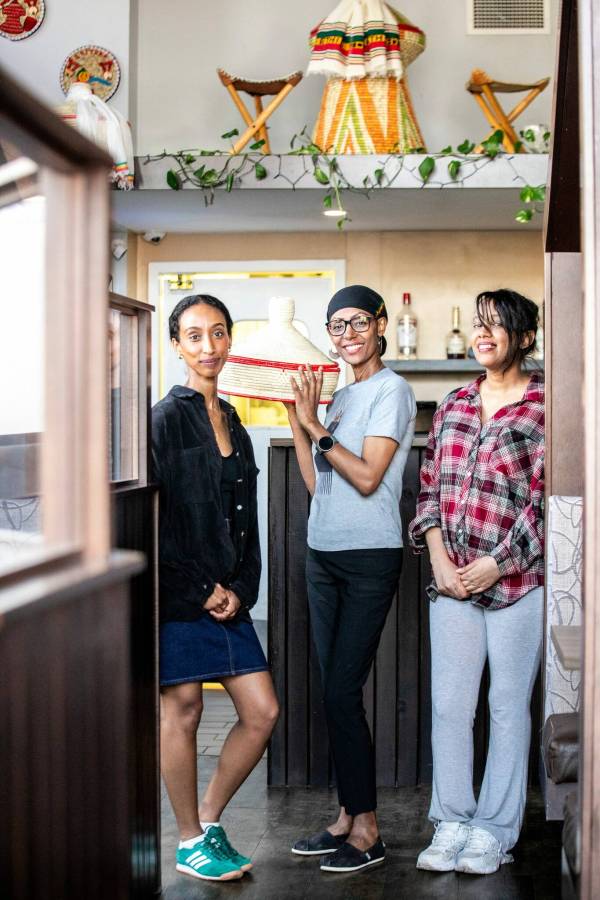
From left: Samra Solomon, Tammy Fekadu and Hanan Salim at Baro restaurant, named for the river that rolls through the Ethiopian highlands.
Riverine origins matter at Baro, an eatery just west of the Health Sciences Centre on Notre Dame Avenue, but don’t overlook the connective power of the hyphen on the street-facing sign at chef Tammy Fekadu’s Ethiopian-Eritrean cuisine.
A waterway that rolls for more than 300 kilometres in the Ethiopian highlands, serving as a major cultural and economic thoroughfare for the nearby Gambella region as well as the South Sudanese state to the west, the Baro River is a reminder of communal reliance on precious natural resources, says Fekadu’s eldest daughter, Samra Solomon.
The hyphen is a bridge spanning political divides for Winnipeggers whose homelands have been engaged in decades of ongoing territorial tensions and civil war.
“My mom almost hesitated to call it ‘Baro Ethiopian-Eritrean Cuisine,’ just because some people might not be happy with that politically and maybe even morally,” says the 26-year-old Solomon, who manages the restaurant on top of a full-time job in the insurance business.
“But firstly, for her, she is both Ethiopian and Eritrean, and she wanted to honour both sides of that. Second to that, I think in the younger generation, we are moving towards being a lot more inclusive and coming together more. So it’s just a step in the right direction that we did that.”
Since emigrating to Winnipeg in 1994, Fekadu has been making strides as a West End entrepreneur; for nearly 30 years, she owned and operated Monti’s Hair Studio, which has been located on Ellice, Sargent and Notre Dame avenues.
Last summer, Fekadu was driving down Notre Dame when she and her daughters spotted a fresh opportunity.
After six years of operation at 810 Beverley St., Little Nana’s Italian Kitchen had packed up its pasta, meaning the longtime restaurant space — it had been vegetarian-forward spot Beet Happening prior to 2019 — was available for lease. (Little Nana’s has since decamped for the Hotel at Falcon Lake, serving house-made pastas and hand-stretched pizzas under the name 1964.)
With encouragement from her daughters Samra and Maya, both of whom have extensive serving experience, the stylist signed on to prepare tibs and kitfo where once Calabrian dishes were served.
“We joke and say it’s like we recolonized it,” says Solomon.
As far as business sense goes, the timing last fall seemed right to lean into the family’s intranational culinary roots, and the data support the feeling.
Whereas in 2001, census responses in the Central Park and Spence neighbourhoods didn’t list Ethiopia or Eritrea as standalone sources of local immigration, by 2016 — with civil war unfolding in Tigray, a region that straddles the Ethiopian-Eritrean border — area demographics in Winnipeg began experiencing a corresponding shift.
According to city data, in 2016, speakers of Tigrinya and Amharic — two of the more prominent language groups in Ethiopia and Eritrea — accounted for a combined 8.3 per cent of the population in Spence, with 16.6 per cent in nearby Central Park. By 2021, those combined percentages had respectively grown to 12.55 and 30.1 per cent.
In 2016, less than 20 per cent of recent immigration in both Spence and Central Park could be traced to Ethiopia and Eritrea. By 2021, newcomers from those countries accounted for about 50 per cent of all recent immigrants living in both Spence and Central Park areas, census data show. (In Spence, data revealed 44 per cent of recent immigrants to the neighbourhood came from Eritrea, with 5.6 per cent from Ethiopia.)
Those demographic expansions have led to economic opportunity and sufficiency in the downtown region, with newcomers from those regions opening flourishing businesses in sectors such as fashion, hairstyling and grocery-food services.
All those factors should add up to a winning recipe at Baro, where the scents of frankincense and sweet popcorn swirl in the air along with steam from freshly brewed and poured coffee. The restaurant’s logo, depicting three women fetching water from the river, reflects its intergenerational, matrilineal roots.
So far, Samra Solomon says the community’s response to the eatery has reassured the first-time restaurateurs that Baro’s message of sharing meals has been well-received.
“It’s just been great,” she says. “We’ve had both Ethiopian and Eritrean people coming in to enjoy food and coffee together, and that’s exactly what we’ve wanted.”
MIKAELA MACKENZIE / FREE PRESS
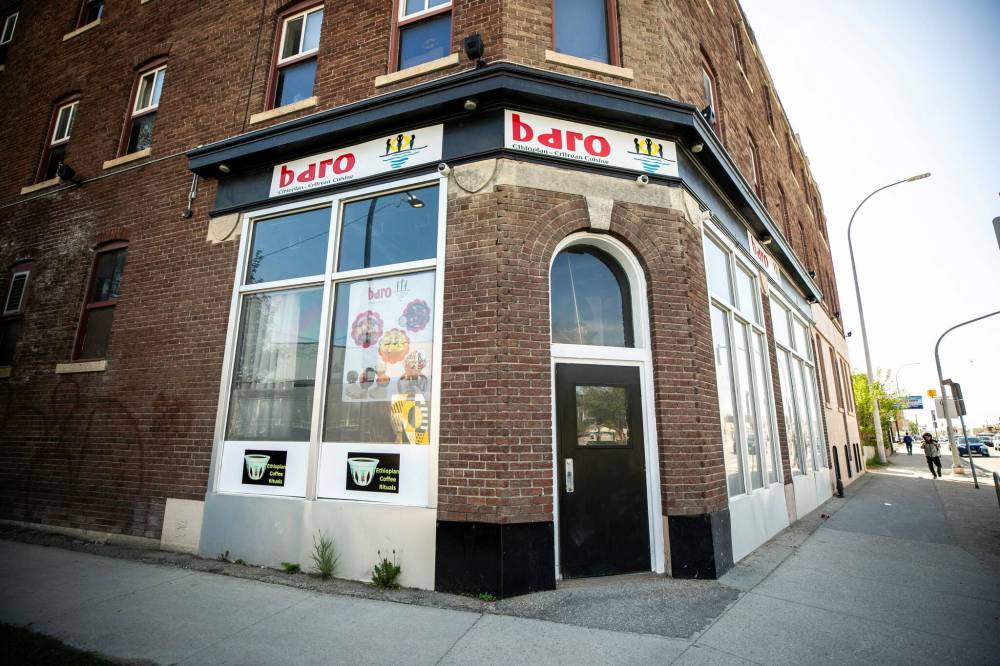
Baro restaurant offers up Ethiopean and Etritrean cuisine.
MIKAELA MACKENZIE / FREE PRESS
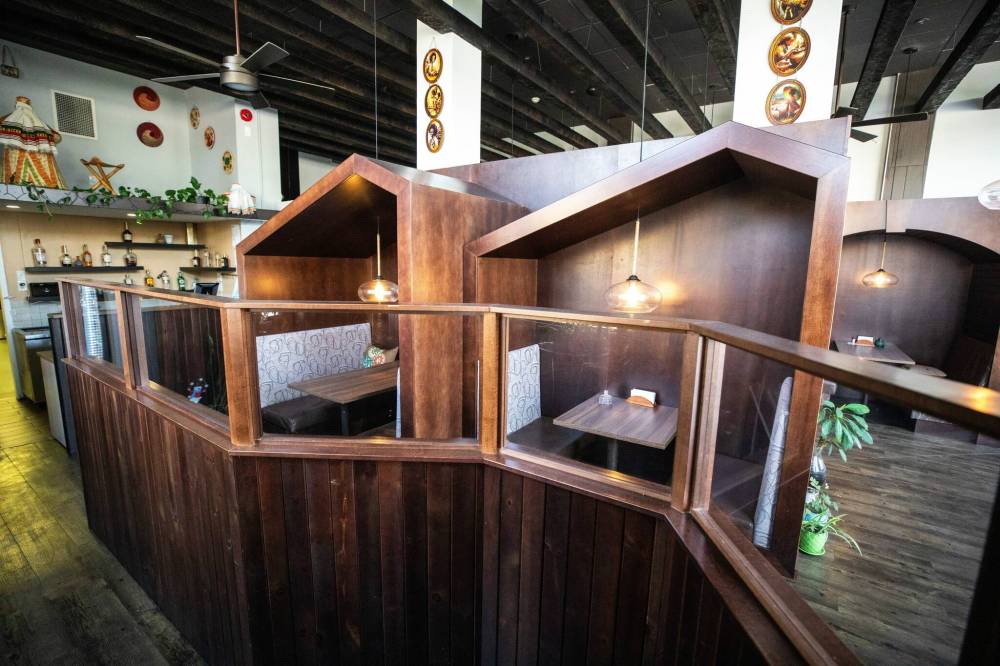
Baro restaurant occupies the space formerly held by Little Nana’s Italian Kitchen and Beet Happening.
|
Winnipeg Free Press
|
|
|





 Prev
Prev






 Linear Mode
