HomeDiagramsDatabaseMapsForum About
     

Go Back   SkyscraperPage Forum > Regional Sections > Canada > Manitoba & Saskatchewan


Reply

 
Thread Tools Display Modes
     
     
  #801  
Old Posted Feb 26, 2026, 6:51 PM
bomberjet bomberjet is offline
Registered User
 
Join Date: Nov 2012
Location: Winnipeg
Posts: 16,195
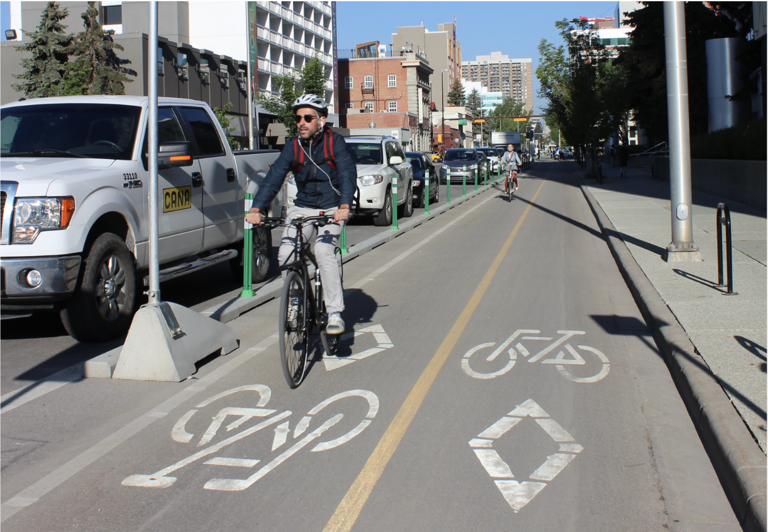
I too agree with this. Just build the pathway at the top of the curb. Way easier to maintain, doesn't trap leaves, clearing snow is easier. There's probably some fancy reason for the curb set-up they use.
Reply With Quote
     
     
  #802  
Old Posted Feb 26, 2026, 8:55 PM
WPG84 WPG84 is offline
Registered User
 
Join Date: Apr 2024
Location: 204
Posts: 19
As an avid cyclist. The raised bike lane are way better. Look at Maryland (from Broadway to the bridge) is such a better design than Sherbrook. Being raised makes a huge difference with drainage and keeping the lane clear of debris. Im sure upfront cost is more to construct but long term likely cheaper
Reply With Quote
     
     
  #803  
Old Posted Feb 27, 2026, 5:58 PM
bussche bussche is offline
Registered User
 
Join Date: May 2019
Posts: 136
Quote:
Originally Posted by WPG84 View Post
As an avid cyclist. The raised bike lane are way better. Look at Maryland (from Broadway to the bridge) is such a better design than Sherbrook. Being raised makes a huge difference with drainage and keeping the lane clear of debris. Im sure upfront cost is more to construct but long term likely cheaper
I generally agree about Maryland, but the snow clearing has been terrible this year.

The street plows push up all the snow into the bike lane. Eventually they send a sidewalk sized snowblower thing to clear it, leaving a trench, essentially. That's fine for a while but after one warm spell it becomes a frozen rutted mess. They run a regular sidewalk plow to clear subsequent snowfall but it can't get right down to a compacted surface because of the aforementioned frozen ruts.

You're left with a few inches of semi-compacted snow, extremely difficult to pedal through and constant fish tailing back and forth.
Reply With Quote
     
     
  #804  
Old Posted Feb 27, 2026, 7:52 PM
bomberjet bomberjet is offline
Registered User
 
Join Date: Nov 2012
Location: Winnipeg
Posts: 16,195
The snow clearing definitely needs to be focused on in either set-up really. What do they do with the snow with the depressed bike lanes? Where does the snow from the road go? Just piled in a windrow along the curb line between the road and bike lane?
Reply With Quote
     
     
  #805  
Old Posted Feb 27, 2026, 9:16 PM
Authentic_City's Avatar
Authentic_City Authentic_City is offline
Registered User
 
Join Date: Apr 2011
Location: Winnipeg, MB
Posts: 1,786
The snow clearing can be kind of comical sometimes. The plows clear the roads and push snow into the bike lane. Then they half ass clear the bike lane with a sidewalk plow and push snow onto the the sidewalk and/or back on the road. Then they clear the sidewalk and push snow back into the bike lane. The bike lanes at road level with curbs are the worst for snow clearing, poor drainage, collecting garbage and debris, you name it. Better to build raised bike lanes.
Reply With Quote
     
     
  #806  
Old Posted Mar 27, 2026, 6:33 AM
Wpg_Guy's Avatar
Wpg_Guy Wpg_Guy is online now
Moderator
 
Join Date: Aug 2002
Location: Winnipeg, Manitoba
Posts: 7,418
Quote:
Winnipeg city council moves ahead with permanent Wellington Crescent bike lane
Vote to ask province to give city the power to set default speed limit also passes

Mar 26, 2026 6:16 PM


Dozens of people showed up at the City of Winnipeg's council meeting Thursday to push for a temporary bike lane on Wellington Crescent originally planned to be installed this year. They wore red because it was the favourite colour of cyclist Rob Jenner, who was hit and killed by a speeding driver in 2024. (Catherine Moreau/CBC)

Winnipeg city council has voted to scrap a plan to install a temporary bike lane on Wellington Crescent and instead begin work to design permanent infrastructure originally planned for 2029, with the goal of starting construction next year.

Road safety advocates had urged the city to make improvements to the section of Wellington Crescent east of Academy Road after cyclist Rob Jenner was hit and killed in 2024.

Lucky Adams, one of dozens of advocates who showed up to Thursday's meeting wearing red, said he was disappointed at the outcome.

"It's very disappointing given how urgent it is needed to put safer infrastructure on Wellington Crescent," Adams said.

City staff had recommended installing temporary lanes between Stradbrook Avenue and Academy this spring, using painted lines and flexible plastic posts to separate cyclists from vehicle traffic. The plan also called for the speed limit along that section of Wellington to be reduced to 40 kilometres per hour.

Fort Rouge-East Fort Garry Coun. Sherri Rollins brought forward a motion at the meeting, trying to salvage parts of the city's original plan.

"Something was supposed to happen this year," she said.

"We thought 2026 would deliver real on-the-ground progress to make Wellington Crescent safer and more comfortable for people walking and biking. And yet, here we are."

Council voted 10-6 to approve part of Rollins' motion, which lowered the speed limit to 40 km/h on Wellington from Academy to Stradbrook, and on sections of Stradbrook and River Avenue from Wellington to Nassau Street.

Adams had "mixed feelings" about that vote. While Adams was pleased the speed limit reduction passed, another part of Rollins' motion that would have closed several left-turn lanes along Wellington failed to pass in a tie vote.

"It's an unsatisfying result. It's not enough to make Wellington a safe space for cyclists and pedestrians, but it is an improvement," Adams said.

The permanent bike lane is expected to cost $5.9 million.

Request heading to province

Councillors also voted 13-3 to ask the Manitoba government to change the Highway Traffic Act to allow the city to set its own default residential speed limit.

City staff recommended lowering the speed limit on local and collector residential streets to 40 km/h. Currently, the city would need to pass bylaws and install signs on each individual street in order to lower the speed limit, at an estimated cost of $8 million to $10 million.

Some on council, such as North Kildonan Coun. Jeff Browaty, have called the idea a huge mistake, arguing most serious traffic injuries occur on larger regional roads.

Mayor Gillingham says he wants the province to change the law before having a debate about lowering the speed limit in the city.
CBC Manitoba
__________________
Winnipeg Act II - April 2024

Winnipeg Developments

In The Future Every Building Will Be World-Famous For Fifteen Minutes.
Reply With Quote
     
     
  #807  
Old Posted May 16, 2026, 11:22 PM
Wpg_Guy's Avatar
Wpg_Guy Wpg_Guy is online now
Moderator
 
Join Date: Aug 2002
Location: Winnipeg, Manitoba
Posts: 7,418
Quote:
Klein: Winnipeg should follow Alberta’s lead on bike lanes
Opinion by Kevin Klein


KLEIN: Winnipeg should follow Alberta’s lead on bike lanes

Spring has arrived in Winnipeg, and once again, drivers are looking at long stretches of near-empty bike lanes while traffic backs up on roads that keep losing space for vehicles. The city needs to follow Alberta’s lead and stop expanding bike lane construction until there is real evidence that the spending justifies the cost. Winnipeg taxpayers deserve facts before millions more are diverted away from roads, bridges, sidewalks, and other infrastructure people use every day.

The issue is not whether cycling should exist in Winnipeg. Of course it should. The issue is whether city hall is making responsible financial decisions during a time when families are already struggling with rising costs, poor roads, higher taxes, and increasing pressure on household budgets.

When I served on the city council, I repeatedly pushed for one simple thing: real data. I wanted the city to measure exactly how many people were using these bike lanes and separated cycling corridors throughout the year. Not estimates. Not advocacy numbers. Actual usage data collected independently by the city.

That request was opposed.

Bike advocacy groups fought against the motion. So did Mayor Scott Gillingham, Coun. Janice Lukes and most council members. That should concern taxpayers. If city hall is confident these projects are successful, then collecting accurate data should be easy.

Instead, Winnipeg continues spending millions while the public is left guessing about the return on investment. Are taxpayers funding infrastructure used by thousands every day or by a few hundred seasonal riders? Nobody at city hall seems interested in providing a clear answer.

That is not good government.

Alberta’s provincial government is now stepping in because cities like Calgary and Edmonton failed to show accountability before removing driving lanes and parking spaces. Premier Danielle Smith’s government is preparing legislation that would require municipalities to justify bike lane projects using traffic impact studies, business impact reviews, and actual usage numbers.

That approach makes sense.

If governments want to reduce the number of vehicle lanes, increase congestion, and spend millions of taxpayer dollars, they should prove that the public benefit outweighs the cost. That should not be controversial.

Winnipeg faces many infrastructure problems that affect people every day. Roads are crumbling. Potholes damage vehicles and increase repair bills for families already stretched thin. Emergency response routes are slowed by congestion. Businesses struggle when parking disappears or traffic becomes more difficult near commercial areas. Transit still faces reliability concerns. Yet city hall continues prioritizing expensive bike infrastructure projects without fully proving the value to the broader public.

For the average Winnipeg household, these decisions have real consequences. A parent driving across the city to work and daycare does not care about political slogans around active transportation when they are stuck in longer traffic delays, paying higher fuel costs, and repairing suspension damage caused by neglected roads. Small business owners do not benefit when customers avoid areas where parking has been reduced, and congestion has worsened. Tradespeople, delivery drivers, and service workers depend on reliable road access to earn a living.

Bike groups will argue that the usage numbers are higher than critics believe. Fine. Then let the city collect the data and release it publicly.

That is the part many activists seem unwilling to support.

If the numbers prove the investment is worthwhile, taxpayers can judge for themselves. But refusing to measure usage while continuing to spend millions creates the impression that city hall already knows the results may not justify the expense.

This debate is also about priorities. Winnipeg is not a city with endless financial resources. Every dollar spent on bike lanes is a dollar unavailable for road repairs, community safety, water infrastructure, recreation facilities, snow clearing, or property tax relief. Good governments make difficult decisions based on measurable outcomes, not ideology or pressure from organized activist groups.

There is also a practical reality city hall continues ignoring. Winnipeg’s climate is not Vancouver's or Toronto’s. For large portions of the year, cycling usage drops significantly because of snow, ice, freezing temperatures, and dangerous road conditions. That matters when deciding how infrastructure dollars should be allocated.

The solution is straightforward.

The city should immediately pause new bike lane expansion projects. It should conduct independent, year-round usage studies on existing infrastructure and publicly release the findings. Council should also require cost-benefit reviews before removing traffic or parking lanes for future projects. If bike lanes cannot demonstrate strong and measurable public value, the funding should be redirected toward infrastructure priorities that serve the majority of residents every day.

Winnipeg taxpayers are not asking for ideology. They are asking for accountability. Spending millions without measuring results is not progressive, innovative, or sustainable. It is simply poor management of public money.
WinnipegSun.com
__________________
Winnipeg Act II - April 2024

Winnipeg Developments

In The Future Every Building Will Be World-Famous For Fifteen Minutes.
Reply With Quote
     
     
  #808  
Old Posted May 17, 2026, 12:10 AM
jim_bred jim_bred is offline
Registered User
 
Join Date: Aug 2025
Posts: 164
I can't stand Klein and generally think he's a dink but I agree with him on this one.
Reply With Quote
     
     
  #809  
Old Posted May 18, 2026, 9:34 PM
davequanbury davequanbury is offline
Registered User
 
Join Date: Mar 2018
Posts: 218
Quote:
Originally Posted by Wpg_Guy View Post

Here are a couple points that are hard to measure with typical cost analysis tools:

Spending on bike lanes is equitable because they are used by people who can't afford cars as well as those that can.

Spending on bike lanes makes good sense for building vibrancy in neighbourhoods and downtown because people can access these areas and won't add to the parking strain surrounding the shops or restaurants they frequent.

Safe biking infrastructure is an awesome investment in the future. And I doubt any data would satisfy someone like Klein.

The idea behind building active transportation infrastructure isn't only to serve the needs of those currently engaing in active transportaion. It is to create infrastructure so that more people decide to use active transportation. So the data to prove the success of this investment should be the increase in number of people deciding to bike etc, not simply the number of people using them. The only way to capture this increase would be to do a comparative study.
Reply With Quote
     
     
  #810  
Old Posted May 18, 2026, 9:39 PM
trueviking's Avatar
trueviking trueviking is offline
surely you agree with me
 
Join Date: Sep 2004
Location: winnipeg
Posts: 14,915
We should definitely do return on investment analysis for all road infrastructure. It ain’t bike lanes that have made us broke.
Reply With Quote
     
     
  #811  
Old Posted May 19, 2026, 2:06 PM
bussche bussche is offline
Registered User
 
Join Date: May 2019
Posts: 136
Interesting how he makes all this bluster about how much money is spent on bike lanes...while never informing the reader how much money is spent on bike lanes. (or by comparison how much is being spent on road renewal or how much it cost to build out our road network in the first place.)

From the City of Winnipeg Multi Year Budget 2026 Update page:

"$60 million for Pedestrian and Cycling Program over 6 years"

"Over $1 billion for road renewals over next 6 years "

Quote:
A parent driving across the city to work and daycare does not care about political slogans around active transportation when they are stuck in longer traffic delays, paying higher fuel costs, and repairing suspension damage caused by neglected roads.
This comment as well, forcing parents to rely on individual motor vehicle ownership is the root cause of this issue, not imagined traffic delays caused by bike infrastructure. Seems he pulled that one straight from Doug Ford.

Also, framing it as we either we fix potholes or build bike lanes. That's not how this works and as previously shown, we already spend exponentially more of road renewals.

The real issue is that we've built more infrastructure than our tax base can support and the expansions of the city have been almost entirely car centric, which just exacerbates the issue.

He harps on the interests of "Winnipeg taxpayers" but I'm a tax payer too. As someone who commutes year round by bike and rarely drives, I don't feel like I'm getting good value for my tax dollar.

Quote:
For large portions of the year, cycling usage drops significantly because of snow, ice, freezing temperatures, and dangerous road conditions. That matters when deciding how infrastructure dollars should be allocated.
There are more cyclists in Winter than golfers. Not many outdoor rink users in Summer either.

By his logic, that's all a waste of money too since they're not at full capacity year round.

And for the record, the city does have some hard data on bike infra usage.

Reply With Quote
     
     
  #812  
Old Posted May 19, 2026, 3:21 PM
bomberjet bomberjet is offline
Registered User
 
Join Date: Nov 2012
Location: Winnipeg
Posts: 16,195
Cycling numbers nearly double since 4 years ago. Seems like a great sign.
Reply With Quote
     
     
  #813  
Old Posted May 19, 2026, 6:05 PM
WildCake WildCake is offline
Registered User
 
Join Date: May 2016
Posts: 1,061
Quote:
Originally Posted by bomberjet View Post
Cycling numbers nearly double since 4 years ago. Seems like a great sign.
And the winter "dip" isn't flatlining at near zero either, seems like there's a growing number of year-round cyclists.
Reply With Quote
     
     
  #814  
Old Posted May 19, 2026, 7:14 PM
zalf zalf is offline
Registered User
 
Join Date: Jun 2020
Posts: 866
Quote:
Originally Posted by WildCake View Post
And the winter "dip" isn't flatlining at near zero either, seems like there's a growing number of year-round cyclists.
I became one myself precisely because the growing network started connecting places I frequent, including my work. Bike lanes made winter cycling possible; I wasn't willing to chance it before.
Reply With Quote
     
     
  #815  
Old Posted May 19, 2026, 7:36 PM
Unbending's Avatar
Unbending Unbending is offline
Registered User
 
Join Date: Oct 2022
Posts: 239
Same here. Ever since the city built bike lanes along my route and plowed them in the winter, I’ve been cycling year-round. This past winter, there were only two days that I didn’t bike because there was too much snow when I left for work in the morning.
Reply With Quote
     
     
  #816  
Old Posted May 19, 2026, 8:39 PM
bussche bussche is offline
Registered User
 
Join Date: May 2019
Posts: 136
Quote:
Originally Posted by bomberjet View Post
Cycling numbers nearly double since 4 years ago. Seems like a great sign.
To be entirely fair, there are also more locations with sensors but it doesn't account the majority of the increase.
Reply With Quote
     
     
  #817  
Old Posted May 20, 2026, 2:26 AM
jim_bred jim_bred is offline
Registered User
 
Join Date: Aug 2025
Posts: 164
I'm not saying bike infrastructure shouldn't get any funding at all but it will always be a secondary form of transportation after vehicle and transit so the budget should reflect that.
Reply With Quote
     
     
  #818  
Old Posted May 20, 2026, 2:29 AM
jim_bred jim_bred is offline
Registered User
 
Join Date: Aug 2025
Posts: 164
Quote:
Originally Posted by bussche View Post
To be entirely fair, there are also more locations with sensors but it doesn't account the majority of the increase.
Also Winnipeg's population grew almost 170,000 people since the first date on that chart. About a 20% increase.
Reply With Quote
     
     
  #819  
Old Posted May 20, 2026, 3:24 AM
zalf zalf is offline
Registered User
 
Join Date: Jun 2020
Posts: 866
Quote:
Originally Posted by jim_bred View Post
I'm not saying bike infrastructure shouldn't get any funding at all but it will always be a secondary form of transportation after vehicle and transit so the budget should reflect that.
The 2026 multiyear budget includes 60 million dollars for pedestrian and cycling and 1 billion for road renewal. I don't think the AT budget is exactly endangering anyone's ability to drive.
Reply With Quote
     
     
  #820  
Old Posted Jun 8, 2026, 7:19 PM
WPG84 WPG84 is offline
Registered User
 
Join Date: Apr 2024
Location: 204
Posts: 19
I had no idea the City was planning a Phase 2 expansion of the Northwest Hydro Corridor pathway. Apparently it'll extend south from Church to Selkirk and north from Leila to Daylan Marshall Gate Park.
https://www.winnipeg.ca/news/2026-05-08-construction-season-paving-way-better-safer-citywide-travel

I also noticed on my ride this morning that they're building a bike path along Selkirk west of Keewatin. Didn't even know it was in the works until I saw it on the construction map.

Makes me wonder if it's connected to the future transit garage
Reply With Quote
     
     
This discussion thread continues

Use the page links to the lower-right to go to the next page for additional posts
 
 
Reply

Go Back   SkyscraperPage Forum > Regional Sections > Canada > Manitoba & Saskatchewan
Forum Jump


Forum Jump


All times are GMT. The time now is 6:58 AM.

     
SkyscraperPage.com - Privacy Statement - Top

Powered by vBulletin® Version 3.8.7
Copyright ©2000 - 2026, vBulletin Solutions, Inc.