HomeDiagramsDatabaseMapsForum About
     

Go Back   SkyscraperPage Forum > Regional Sections > Canada


Reply

 
Thread Tools Display Modes
     
     
  #5181  
Old Posted Jun 4, 2026, 5:41 PM
O-tacular's Avatar
O-tacular O-tacular is offline
Fake News
 
Join Date: Jul 2008
Location: Calgary
Posts: 25,927
Quote:
Originally Posted by zoomer View Post
I agree - I don't mean anti-AI is fringe but it feels as if the anti-AI protests are bringing together all/most the fringe elements regardless of original agenda in addition to 'mainstream' protesters. For example, it looks like we have white nationalist anti-government types protesting alongside left-wing environmentalists.
In this instance I don't even care. If ai data centres are so horrible that they are a unifying force to drive people across the political spectrum to protest, then that's a good thing imo. That can develop into further dialogue about class warfare and the billionaires destroying the world for profit.

Last edited by O-tacular; Jun 4, 2026 at 7:18 PM.
Reply With Quote
     
     
  #5182  
Old Posted Jun 4, 2026, 6:47 PM
koops65's Avatar
koops65 koops65 is online now
Intergalactic Barfly
 
Join Date: Dec 2006
Location: Quarks Bar
Posts: 8,676
Where are the skylines?
Reply With Quote
     
     
  #5183  
Old Posted Jun 4, 2026, 6:58 PM
zoomer's Avatar
zoomer zoomer is offline
Registered User
 
Join Date: Feb 2004
Posts: 2,923
Quote:
Originally Posted by koops65 View Post
Where are the skylines?


Fredericton by Marcanadian, on Flickr
__________________
Check out MappingVictoria for Breaking News on Victoria developments, comprehensive Project Coverage plus deep dives on urbanism and architecture in BC's Capital City.
Reply With Quote
     
     
  #5184  
Old Posted Jun 4, 2026, 7:04 PM
zoomer's Avatar
zoomer zoomer is offline
Registered User
 
Join Date: Feb 2004
Posts: 2,923
/\ not big enough for the skyline photo fix? Will this help?


View From Casa Loma - May 17, 2026 by JohnnyJayEh, on Flickr
__________________
Check out MappingVictoria for Breaking News on Victoria developments, comprehensive Project Coverage plus deep dives on urbanism and architecture in BC's Capital City.
Reply With Quote
     
     
  #5185  
Old Posted Jun 4, 2026, 7:35 PM
koops65's Avatar
koops65 koops65 is online now
Intergalactic Barfly
 
Join Date: Dec 2006
Location: Quarks Bar
Posts: 8,676
Much better... thanks!
Reply With Quote
     
     
  #5186  
Old Posted Jun 4, 2026, 8:28 PM
shappy's Avatar
shappy shappy is offline
Registered User
 
Join Date: Mar 2004
Posts: 2,341
Quote:
Originally Posted by Nouvellecosse
These are both about 13km from Gare Centrale, a similar distance as Yonge/Sheppard from Union. While it isn't like that consistently for Montreal at that distance, I can't think of anywhere that far from Union where this is the scale of lowrise residential density despite Toronto being a much larger metro areas. This is what having an abundance of missing middle housing looks like.
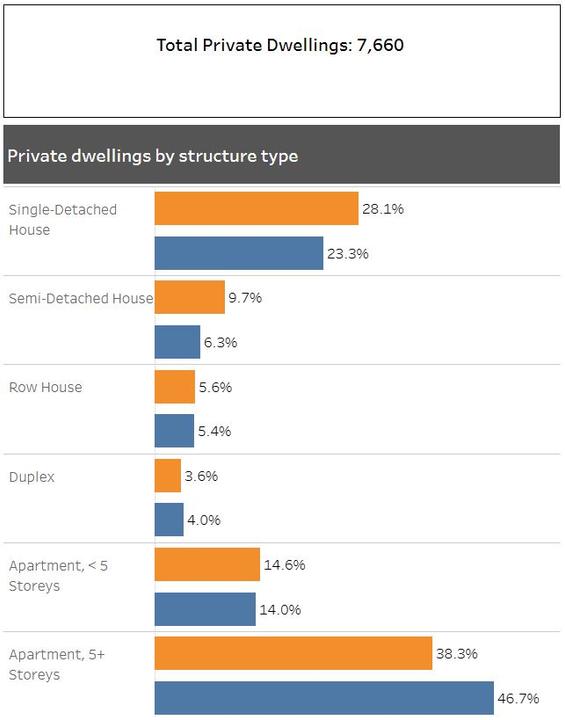
Well that is one way it can look. This is a neighbourhood profile of Oakdale-Beverley Heights in North York which is about 13.5km from Union:


The "missing middle" portion combines to 33.5%. Aesthetically it's different from Montreal and not as urbane, I agree, but the lack of missing middle is not the right argument. The following breakdown exists for pretty much any suburban Toronto neighbourhood.

https://maps.app.goo.gl/hJwCgEFg7jyNFXRLA
https://maps.app.goo.gl/XvE4caYKDYt6AGCU6
https://maps.app.goo.gl/8y7KU23uHA18h2Ps7

Quote:
Originally Posted by Nouvellecosse
Yet there are people who think a few blocks of that scale right in or near downtown dispels the idea that Toronto is lacking in that regard.
Is it lacking though? Toronto's central neighbourhoods cover a large area and have a very respectable density profile within the context of NA. They function pretty much the same as cities in a tier or 2 below NYC. It wouldn't be able to sustain all those great commercial streets otherwise. I think this boils down to an aesthetic argument for you and that's totally fine.


source
Reply With Quote
     
     
  #5187  
Old Posted Jun 4, 2026, 11:12 PM
Nouvellecosse's Avatar
Nouvellecosse Nouvellecosse is online now
Volatile Pacivist
 
Join Date: Aug 2005
Location: Nova Scotia
Posts: 11,159
Quote:
Originally Posted by shappy View Post
Well that is one way it can look. This is a neighbourhood profile of Oakdale-Beverley Heights in North York which is about 13.5km from Union:

The "missing middle" portion combines to 33.5%. Aesthetically it's different from Montreal and not as urbane, I agree, but the lack of missing middle is not the right argument. The following breakdown exists for pretty much any suburban Toronto neighbourhood.

https://maps.app.goo.gl/hJwCgEFg7jyNFXRLA
https://maps.app.goo.gl/XvE4caYKDYt6AGCU6
https://maps.app.goo.gl/8y7KU23uHA18h2Ps7
Town/row houses are generally the lowest tier of missing middle. Duplexes are a stretch but can be included if they're in a dense urban format. But in a suburban format that is not middle. That first link is just denser than average suburban housing. But the 2nd and 3rd links would qualify at least.

But honestly, I also doubt that particular neighbourhood is representative of the outer 416 more broadly.

Quote:
Originally Posted by shappy View Post
Is it lacking though? Toronto's central neighbourhoods cover a large area and have a very respectable density profile within the context of NA. They function pretty much the same as cities in a tier or 2 below NYC. It wouldn't be able to sustain all those great commercial streets otherwise. I think this boils down to an aesthetic argument for you and that's totally fine.
Yes I would say it is definitely lacking and not just aesthetic at all. This is a very large metro area so while the inner city would provide a good amount if the metro area was just the city of Toronto, it would take most or all of Toronto proper having the missing middle of that central area to compare to Montreal. It doesn't make sense to compare between cities by only showing stats about one of them.

If you look at the actual stats for Toronto and Montreal CMAs, as of 2021 Toronto CMA has 39% of total households as fully detached and 39% as apartments in buildings of 5 more more floors. Montreal has 32% as fully detached and only 10% in buildings of 5 more more floors. So if we consider everything in between to be "middle" that leaves Toronto CMA with about 30.9% and Montreal with 58%. More specifically, when it comes to prime missing middle (as opposed to barely qualifying like duplexes) Montreal CMA has 758,870 units in apartment buildings of fewer than 5 stories while Toronto CMA has 215,325. Those differences are not just aesthetic.

But even that is only part of the story because the real issue isn't just the percentage of units in each category; it's the percentage of residential land occupied by each housing. The most recent number I've seen for the city proper of Toronto is that about 70% of residential land is occupied by detached housing which is huge when fully detached is only 39% of units in the CMA so Toronto itself would be even lower. Even small percentage differences in the number of detached housing makes a big difference on the ground. People living in fully detached houses take up a disproportionately large amount of land and that affects how a region functions. Both highrises and suburban development styles like fully detached houses can be isolating and cause people to feel detached from the wider community which middle format housing avoids. And it isn't just the raw density either. It's the number of people living near the street level and how those homes interact with the street. But sure, aesthetics is part of it.
__________________
"The reasonable man adapts himself to the world; the unreasonable one persists in trying to adapt the world to himself. Therefore all progress depends on the unreasonable man." - George Bernard Shaw
Don't ask people not to debate a topic. Just stop making debatable assertions. Problem solved.
Reply With Quote
     
     
  #5188  
Old Posted Jun 5, 2026, 12:57 PM
shappy's Avatar
shappy shappy is offline
Registered User
 
Join Date: Mar 2004
Posts: 2,341
^ My intention is not to compare them (certainly not CMAs), just pointing out that missing middle can look different than the Montreal examples you posted. It's not ideal and the "yellow belt" is not sustainable - I agree with your points about land use, etc.

Quote:
Originally Posted by Nouvellecosse
Yet there are people who think a few blocks of that scale right in or near downtown dispels the idea that Toronto is lacking in that regard.
And to this I'm saying that the lack of plexes does not greatly impact the central areas because what exists is functionally similar and effective. More urban options for renters and perhaps owners is always welcome though.
Reply With Quote
     
     
  #5189  
Old Posted Jun 5, 2026, 1:16 PM
Maldive's Avatar
Maldive Maldive is online now
Registered User
 
Join Date: Sep 2004
Posts: 5,145
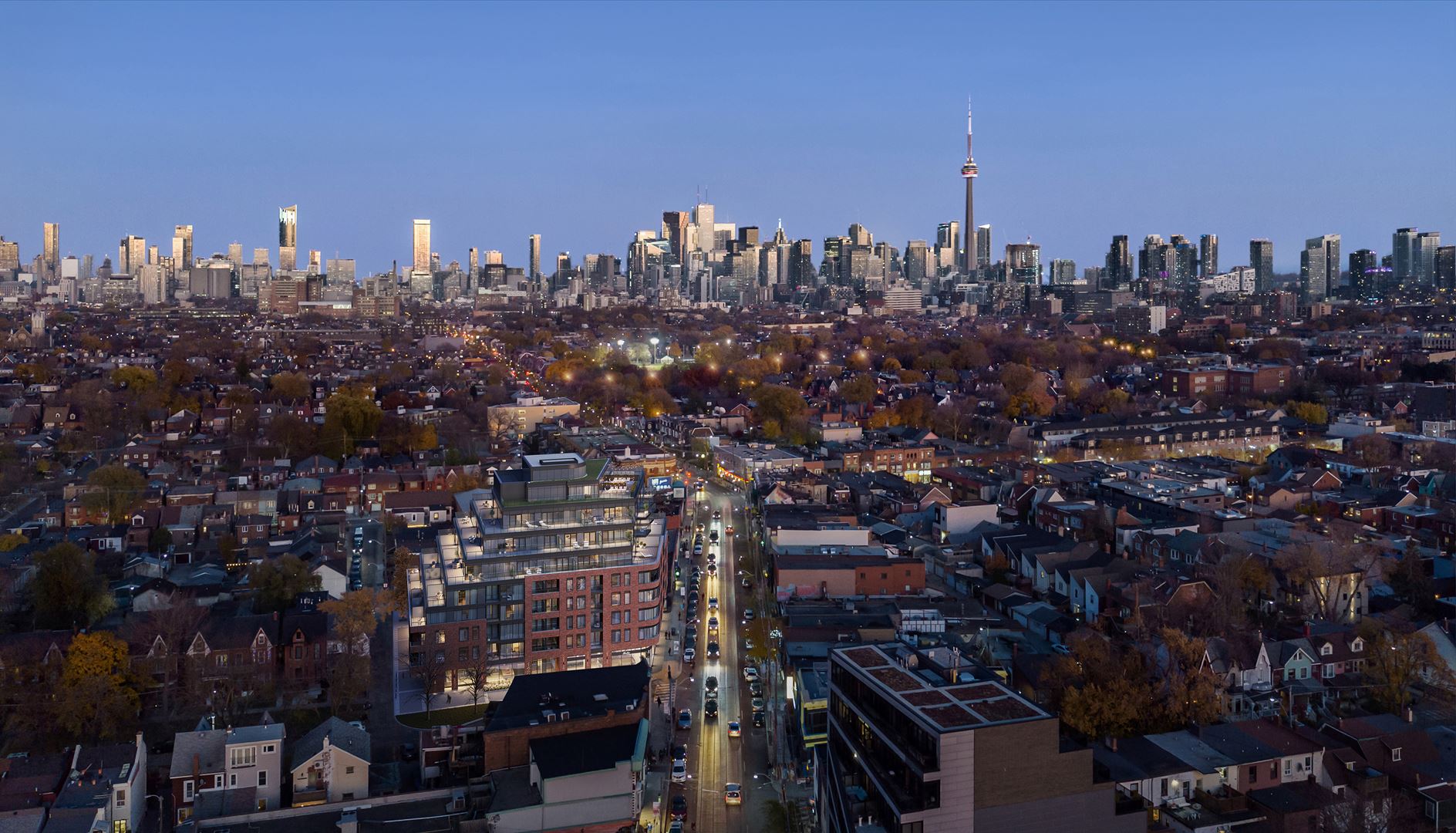
Double diamonds (CIBC Square 1 & 2).


kotsy
__________________
circa 2008: home of the 3rd best skyline in N.A. +++ circa 2028: home of the 2nd best skyline in N.A. (T-Dot)
Reply With Quote
     
     
  #5190  
Old Posted Jun 5, 2026, 1:18 PM
MolsonExport's Avatar
MolsonExport MolsonExport is offline
Pass me the Vomit Bag.
 
Join Date: Oct 2003
Location: Otisburgh
Posts: 51,008
That's a nice shot.
__________________
The whole problem with the world is that fools and fanatics are always so certain of themselves, and wiser people so full of doubts. (Bertrand Russell). Sweet Loretta fart thought she was a cleaner, but she was a frying pan. (John Lennon)
Reply With Quote
     
     
  #5191  
Old Posted Jun 5, 2026, 3:40 PM
Nouvellecosse's Avatar
Nouvellecosse Nouvellecosse is online now
Volatile Pacivist
 
Join Date: Aug 2005
Location: Nova Scotia
Posts: 11,159
Quote:
Originally Posted by shappy View Post
And to this I'm saying that the lack of plexes does not greatly impact the central areas because what exists is functionally similar and effective. More urban options for renters and perhaps owners is always welcome though.
Oh well that makes sense then. I was mostly just responding to the comparison others were making between Toronto and Montreal (and others) when people were talking about ways that each seem larger. The scale that Montreal's mid-scale urban form extends makes Montreal feel larger than its actual population size for me. But I agree that in the central areas Toronto isn't really lacking in mid-scale.
__________________
"The reasonable man adapts himself to the world; the unreasonable one persists in trying to adapt the world to himself. Therefore all progress depends on the unreasonable man." - George Bernard Shaw
Don't ask people not to debate a topic. Just stop making debatable assertions. Problem solved.
Reply With Quote
     
     
  #5192  
Old Posted Jun 5, 2026, 5:03 PM
someone123's Avatar
someone123 someone123 is online now
hähnchenbrüstfiletstüc
 
Join Date: Nov 2001
Location: Vancouver
Posts: 35,724
I think I'd still give Montreal the edge but it's easy to overstate it and I wonder how meaningful high level statistics about building type or densities over large areas are from an urbanism perspective.

When I think about the parts of Montreal that are a tier above I'm thinking of brownstone-like areas, often with limestone facades, closer in. You can see one example around Square St-Louis. Montreal also wins for large older apartment buildings. Farther out, yes, there are some 1940s flats that are denser than 1940s bungalows, but those neighbourhoods can resemble Soviet-era Bucharest and I am not sure how jealous Toronto should be of them.

On the flip side in Toronto the modern housing type inhabited by a large and growing proportion of residents is highrise condos and there are some nice 2.5 storey rowhouse areas that can hit triplex level with modest infill. It does seem like it would be good to have more of a recipe for adding "gentle density" to certain inner neighbourhoods that are trapped in amber, more or less, but aren't so historic that it makes sense from a planning perspective. I don't think it should be beyond the pale to add a couple floors to average houses on side streets around the Danforth for example, and it might make sense to create a kind of design language to allow people to build that as of right.
Reply With Quote
     
     
  #5193  
Old Posted Jun 5, 2026, 6:01 PM
Nouvellecosse's Avatar
Nouvellecosse Nouvellecosse is online now
Volatile Pacivist
 
Join Date: Aug 2005
Location: Nova Scotia
Posts: 11,159
Quote:
Originally Posted by someone123 View Post
I think I'd still give Montreal the edge but it's easy to overstate it and I wonder how meaningful high level statistics about building type or densities over large areas are from an urbanism perspective.
That's true when people are presenting stats as if they're important for their own sake since stats are really only important for what they represent or correlate with. But in my case it was my experience with these areas that made me draw my initial conclusions about them and I only mentioned the stats to show that it wasn't just a matter of perception and that there are tangible differences at play. At its core, urban design is about human experience. People's ability to enjoy urban spaces and to live their lives in a high quality, fulfilling way. But its hard to talk about these things solely in terms of feelings and experience since if the person your speaking to hasn't experienced the same thing themselves, it's very hard to convey - particularly if they're skeptical. So they tend to need something tangible and quantifiable.
__________________
"The reasonable man adapts himself to the world; the unreasonable one persists in trying to adapt the world to himself. Therefore all progress depends on the unreasonable man." - George Bernard Shaw
Don't ask people not to debate a topic. Just stop making debatable assertions. Problem solved.
Reply With Quote
     
     
  #5194  
Old Posted Jun 5, 2026, 6:24 PM
Monolith's Avatar
Monolith Monolith is offline
Pacific Breeze
 
Join Date: Jan 2007
Location: Southwestern British Columbia
Posts: 1,234
Reply With Quote
     
     
  #5195  
Old Posted Jun 5, 2026, 7:03 PM
someone123's Avatar
someone123 someone123 is online now
hähnchenbrüstfiletstüc
 
Join Date: Nov 2001
Location: Vancouver
Posts: 35,724
Quote:
Originally Posted by Nouvellecosse View Post
That's true when people are presenting stats as if they're important for their own sake since stats are really only important for what they represent or correlate with. But in my case it was my experience with these areas that made me draw my initial conclusions about them and I only mentioned the stats to show that it wasn't just a matter of perception and that there are tangible differences at play. At its core, urban design is about human experience. People's ability to enjoy urban spaces and to live their lives in a high quality, fulfilling way. But its hard to talk about these things solely in terms of feelings and experience since if the person your speaking to hasn't experienced the same thing themselves, it's very hard to convey - particularly if they're skeptical. So they tend to need something tangible and quantifiable.
There is really nothing wrong with the stats and the data can be interesting and beautifully presented (e.g., in a map). I do think it has narrow applicability, like it might tell you how much farmland otherwise might have been gobbled up by an alternate development style. Often the data quality is not there but people think numbers imply sound reasoning. The correlation with urbanism is maybe 0.2, not 0.9. At very high densities (Hong Kong) it gets interesting too but we mostly don't have this in Canada.

I think the "stats battle" on SSP is often kind of pathological and just that compelling. I often talk about my experiences in places I've visited. Sometimes I get a bunch of semi-relevant stats back because somebody doesn't like what may be a pretty basic on-the-ground observation. Maybe it's better just to agree to disagree in such cases or disregard an undesirable perspective. SSP used to have much better actual discussion.

It's a wider phenomenon in society with social media factoids or very superficial Wikipedia or AI-generated content that sits atop a scientistic neoliberal culture where people disregard human experience unless numbers are attached. The YIMBY movement suffers from this. It's not all bad, but it's got core flaws in its values.
Reply With Quote
     
     
  #5196  
Old Posted Jun 5, 2026, 7:03 PM
jc_yyc_ca jc_yyc_ca is offline
Registered User
 
Join Date: Mar 2016
Location: Calgary
Posts: 923
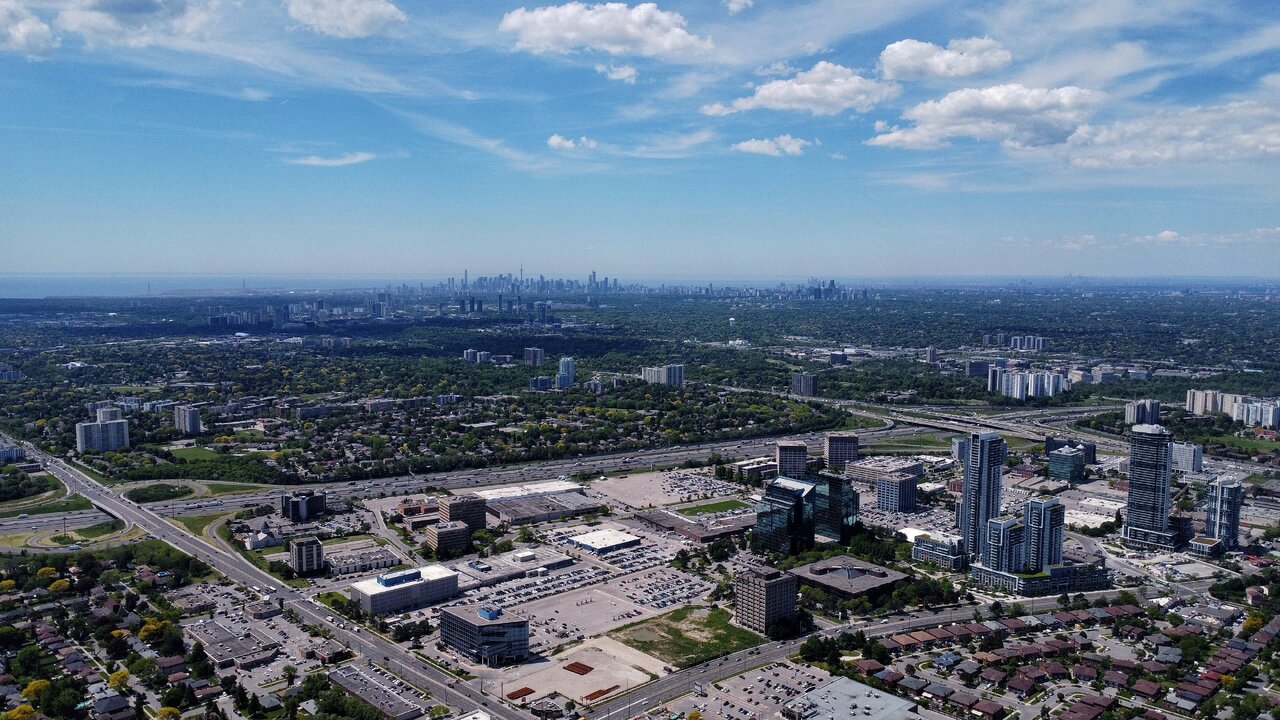
Not the typical Toronto shot, this one being from a distance suburban angle, but gives a decent view of all skylines.


Source: Kris at Skyrisecities.
Reply With Quote
     
     
  #5197  
Old Posted Jun 5, 2026, 7:13 PM
jc_yyc_ca jc_yyc_ca is offline
Registered User
 
Join Date: Mar 2016
Location: Calgary
Posts: 923
A few more from the illustrious Kotsy


Forma vs. Blue Hour by kotsy, on Flickr
Fiery Diamonds by kotsy, on Flickr

Kotsy at Skyrise/Flickr
Reply With Quote
     
     
  #5198  
Old Posted Jun 5, 2026, 9:19 PM
Nouvellecosse's Avatar
Nouvellecosse Nouvellecosse is online now
Volatile Pacivist
 
Join Date: Aug 2005
Location: Nova Scotia
Posts: 11,159
^ That first one in particular is gorgeous! Especially since River 3 is one of my favourite buildings from the last boom.

Quote:
Originally Posted by someone123 View Post
There is really nothing wrong with the stats and the data can be interesting and beautifully presented (e.g., in a map). I do think it has narrow applicability, like it might tell you how much farmland otherwise might have been gobbled up by an alternate development style. Often the data quality is not there but people think numbers imply sound reasoning. The correlation with urbanism is maybe 0.2, not 0.9. At very high densities (Hong Kong) it gets interesting too but we mostly don't have this in Canada.
That's a huge problem when it comes to density. Not only because density stats can be so easily skewed based on what land is and isn't included, but as you say, it can take so many different forms. It's less of an issue when talking about specific development types, but even then, a category like "apartment buildings of fewer than 5 floors" can still take different forms. Like they can be surrounded by large lawns or packed together and right to the street in like town houses. Or they can be 2 stories or 4 stories which is a 100% difference in density. So you'd need to combine different stats, and people will bicker on which ones to use,

Quote:
Originally Posted by someone123 View Post
It's a wider phenomenon in society with social media factoids or very superficial Wikipedia or AI-generated content that sits atop a scientistic neoliberal culture where people disregard human experience unless numbers are attached. The YIMBY movement suffers from this. It's not all bad, but it's got core flaws in its values.
That reminds me of the McNamara fallacy. I don't know if it's a disregard of human experience as much as it is a desire for verifiability. I think we view experiential testimony as being suspect since people can have biases or even be intentionally deceptive so we want independent confirmation. Which probably comes from how it's drilled into our heads in academia that if you can't cite a reputable external source for a claim, then it doesn't count.

Which does have a sound logical basis in that if someone's reaction to something - such as preferring one city's built environment over another's - is based on something solely within that person, then it isn't very relevant to other people who didn't have that reaction. But if it's based on relevant differences between the cities, then that has implications for other people since they could also be affected. For instance, if a person felt safe walking through one city and felt frightened walking through another, one possibility is that there is some difference in the danger levels of the two cities in which case there should be some way to measure that difference. Or if there isn't any meaningful difference between the two and the person just heard more fear mongering in the media about one than the other, it should be possible to reveal that with stats. But to your point, the "should" does a lot of heavy lifting in that there are some things (maybe not so much the danger example) that can affect human experience that are difficult or even impossible to measure.

For me, the challenge really comes down to determining which type of situation it is. The McNamara fallacy is kind of like other similar fallacies such as the sunk cost fallacy in that the type of reasoning in question is really only fallacious when applied incorrectly. With the McNamara fallacy, it really depends whether the thing the person cares about can realistically be measured, if not directly, at least via proxies that offer a good approximation. And that comes down to whether the person is making a claim about the external world or a claim about their feelings about it or perceptions of it. Which is hard because the two things are often closely interwoven.

__________________
"The reasonable man adapts himself to the world; the unreasonable one persists in trying to adapt the world to himself. Therefore all progress depends on the unreasonable man." - George Bernard Shaw
Don't ask people not to debate a topic. Just stop making debatable assertions. Problem solved.
Reply With Quote
     
     
  #5199  
Old Posted Jun 5, 2026, 9:37 PM
someone123's Avatar
someone123 someone123 is online now
hähnchenbrüstfiletstüc
 
Join Date: Nov 2001
Location: Vancouver
Posts: 35,724
Quote:
Originally Posted by Nouvellecosse View Post
Like they can be surrounded by large lawns or packed together and right to the street in like town houses. Or they can be 2 stories or 4 stories which is a 100% difference in density. So you'd need to combine different stats, and people will bicker on which ones to use,
There are questions like how these areas function, how appealing they are, what they offer (often with the amenity having a population of 0), and so on. I think the biggest quantitative fallacy on SSP is that population numbers are the "score" of an area, and life is like Sim City with achievements getting unlocked at certain scores. There's some very rough truth to it but it's mostly not a good model in real life. Switzerland has cities with around 100-200k with metro-like transit for example while there are 10 million plus agglomerations that don't have that infrastructure. Really, you can build just about any scale of human settlement without a lot of redeeming urbanist characteristics.
Reply With Quote
     
     
  #5200  
Old Posted Jun 6, 2026, 4:08 PM
someone123's Avatar
someone123 someone123 is online now
hähnchenbrüstfiletstüc
 
Join Date: Nov 2001
Location: Vancouver
Posts: 35,724
Halifax


Source
Reply With Quote
     
     
This discussion thread continues

Use the page links to the lower-right to go to the next page for additional posts
 
 
Reply

Go Back   SkyscraperPage Forum > Regional Sections > Canada
Forum Jump


Forum Jump


All times are GMT. The time now is 1:56 AM.

     
SkyscraperPage.com - Privacy Statement - Top

Powered by vBulletin® Version 3.8.7
Copyright ©2000 - 2026, vBulletin Solutions, Inc.