Quote:
Originally Posted by Steely Dan

^ That list is a good example of why the 5,000 people cut-off is a good idea.
About half of those fall under the threshold, with many containing fewer people than a typical census tract.
Dunes Acres, IN only has 234 people. What is that, like 75 households? Who cares?
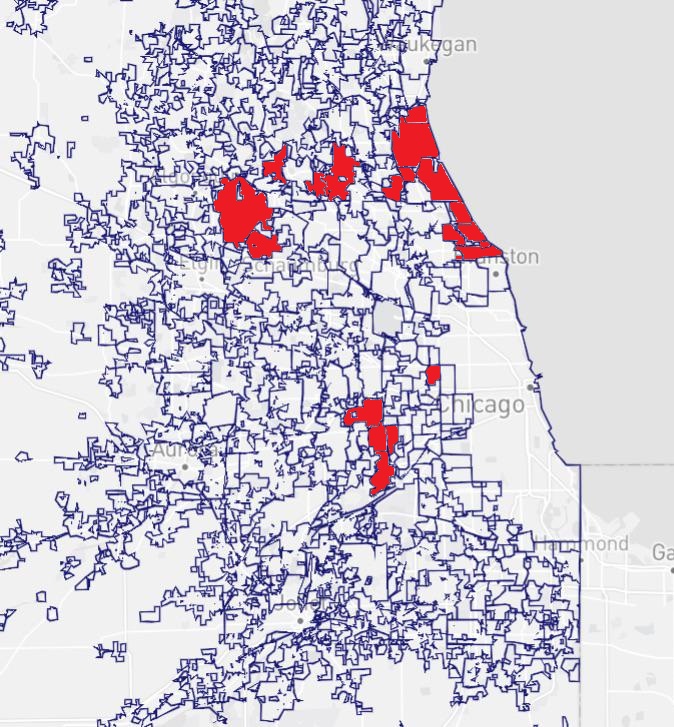
Winnetka/Glencoe/Kenilworth are essentially the same place. And they're all right next to each other.
They should all just merge and call it "Wiglenworth", a town of about 25K rich people along the shore of lake michigan.
I think that would make it the largest contiguous clump of $500K+ average income housolds in the midwest. Maybe in the entite interior of the nation? (though maybe not with the rise of texas)
|
I would have to agree with the contiguous clump thing. Back in 2013, The Washington Post took census bureau data and came up with this list of the...
Largest Contiguous Clusters of Elite Zip Codes defined by at least 7 in 10 adults have a College Degree and the Average Income exceed $120,000
Area----------------Households---Sq Miles---Zip Codes
Washington DC------513,617-------717--------63
E. Manhattan-------231,688-------5----------12
San Jose-----------201,852-------437--------22
Boston-------------176,024-------513--------39
Oakland------------137,063-------240--------17
Bridgeport---------120,129-------465--------31
Newark-------------114,700-------260--------27
Chicago-------------85,261-------141--------12
N. of Los Angeles---75,428-------260--------10(Malibu to Beverly Hills)
Long Island---------67,610-------87---------14
W. Manhattan--------65,218-------1----------3
Trenton-------------59,421-------246--------12
Philadelphia--------58,478-------125--------12
San Diego-----------57,079-------98---------7
S. of Los Angeles---50,072-------63---------6(South OC)
If you click on this link, you can scroll down and on the right side, you can click on a list with these cities names and you can see a map(not a very good one, but still, of the areas in question.
https://www.washingtonpost.com/sf/local/2013/11/09/washington-a-world-apart/
The data is outdated but I don't think much has really changed, only that these same areas have actually become even more educated and even more affluent, even as other areas have emerged.





 Prev
Prev




 Linear Mode
