HomeDiagramsDatabaseMapsForum About
     

Go Back   SkyscraperPage Forum > Regional Sections > Canada > Atlantic Provinces > Halifax > Urban, Urban Design & Heritage Issues


Reply

 
Thread Tools Display Modes
     
     
  #101  
Old Posted Jul 10, 2024, 11:11 AM
Summerville Summerville is offline
Registered User
 
Join Date: Nov 2018
Posts: 247
Quote:
Originally Posted by Empire View Post
It is so shocking that council has such disregard for built heritage. The old library is a fixture in the community and forms a defined block with the School of Architecture and Saint Mary’s Boys school (1904) The combination of allowing it to deteriorate for years and then electing to allow its potential demolition is beyond comprehension.

When will this city recognize the invaluable assets we have?

Saint Mary’s Boys school (1904)
https://www.google.ca/maps/@44.644707,-6...!2e0!7i16384!8i8192?coh=205409&entry=ttu

Because they waffle about everything,…and then the problem is worse or drastic measures are the only option. They could have transferred the property to Dalhousie many years ago and we wouldn’t have this problem.

The track record of waffling is a long list:

Bloomfield
St. Pats Alexandra
Homelessness
Transit
Housing
Etc

This is what happens when people can’t make a decision. Is it the fault of staff?…do they not have sufficient knowledge and skill? Is it the CAO?…they can’t drive movement of any file? Is it the Mayor?…no extra power in council’s vote but they are paid to be the chief “cheerleader”?

I have had one or two councillors on particular issues such as housing,…this was early on and they deflected and said that it was a provincial problem. Deflection is the key thing that councillors love to do. From my profession.

They have been happy to deflect about infilling in the harbour. Unfortunately, they are wrong to deflect.

This is why I do not intend to vote for any councillor who intends to run for mayor. He’s a very nice guy and wants the best for Halifax,…but Waye Mason was one of the councillors that I mentioned that deflected responsibility for housing when I raised the subject.
Reply With Quote
     
     
  #102  
Old Posted Jul 10, 2024, 11:19 AM
Keith P.'s Avatar
Keith P. Keith P. is online now
Registered User
 
Join Date: Mar 2006
Posts: 8,814
Quote:
Originally Posted by Summerville View Post
This is why I do not intend to vote for any councillor who intends to run for mayor. He’s a very nice guy and wants the best for Halifax,…but Waye Mason was one of the councillors that I mentioned that deflected responsibility for housing when I raised the subject.
This just adds to the long list of reasons to never vote for Mason. Perhaps if this was named "The Khyber II" he would have got up on his hind legs to make a stemwinder of a spiel for supporting the library, since he led the charge for great amounts of HRM tax dollars to be flushed down the drain for the decrepit old Khyber Building where he used to listen to music and do god-knows-what else as a mere youth.
Reply With Quote
     
     
  #103  
Old Posted Jul 10, 2024, 11:38 AM
Keith P.'s Avatar
Keith P. Keith P. is online now
Registered User
 
Join Date: Mar 2006
Posts: 8,814
Three years ago, this piece outlining the shameful history of HRM inaction and obfuscation on the Memorial Library lot was written by historian Leo Deveau and appeared in the Chronicle-Herald:


LEO DEVEAU: Plan for old Memorial Library buried in belly of Halifax bureaucracy | SaltWire
Leo J. Deveau


It’s now been over three years since the Halifax Military Heritage Preservation Society (HMHPS) hosted a community gathering on May 23, 2019, on the status and future of the old Halifax Memorial Library building and grounds in downtown Halifax.

The director of the HMHPS saw the gathering as part of our society’s educational and community outreach mission to share concerns and ideas for repurposing the vacant building, while respecting the surrounding memorial space and burial grounds. Though HRM councillors were invited, only one attended, but he didn’t even represent the area.
Related stories

Many of the over 100 citizens who gathered were surprised to learn that a large number of burials had taken place (4,500) in the grounds around the old library site. Many of the interred had originated from the Poor Work House (see location #4 on the map below), which had opened its doors just west of the site in 1760 for Halifax’s poor and destitute citizens. Subsequently, there were burials of prison inmates, along with the victims of epidemics and disease that took place in the settlement up to the 1850s.

Later, it was reported that anthropologist and archaeologist Jonathan Fowler had determined that the old Memorial Library grounds were in essence an extension of the Old Burial Grounds on Barrington Street that later expanded across to the parking lot west of St. Mary’s Basilica (underneath which lie over 2,400 remains) and going further west up to the Memorial Library grounds.

The whole area in fact is essentially a mortuary district — some have termed it the “Halifax necropolis,” where it’s estimated that over 20,000 Haligonians lie in peace — a peace, especially in the old Memorial Library grounds, that may soon be disrupted.

By 1882, the burial grounds had long ended being used for a cemetery. It was subsequently turned into Grafton Park by the province as a public space, and it, in turn, offered it to the city as a permanent lease with the caveat that it remain a public property.

However, in post-Second World War Halifax, with the lack of a city library, a special alteration to the 1882 Grafton Park grant was allowed in 1947 for the construction of a public library and cenotaph memorial to those Haligonians who served in the Great War, the Second World War, and later Korea. Construction began in 1949 and by Nov. 12, 1951, the then-new Memorial Library opened. Though it wasn’t officially reported, it was known during its construction that many graves on the site were reported uncovered.

Though HRM council has known for many years that a new library was going to be built (it later opened on Dec. 13, 2013), no effort was made to garner public input or ideas on the repurposing of the old Memorial Library building after it was closed in August 2014.

Earlier in 2011, through the efforts of many concerned citizens, the Memorial Library building itself had achieved a heritage assessment score (59) needed to declare it a heritage property. Yet HRM council failed to take up the motion within six months, denying the building heritage status. However, later, the matter was resolved and the building and site now has a heritage designation.

But lo and behold, in November 2018, a curious HRM staff report appeared — a proposed P3 development plan from Dalhousie University to repurpose the old Memorial Library site. It had been declassified and reported in local media, complete with architectural renderings. It was clear that the intention all along was to repurpose the old Memorial Library building and grounds for institutional purposes. Yet, there had been no public meetings, nor calls for public input, to consider how such a public site could be, or should, be repurposed for such an institutional interest.

Since HRM seemed reluctant to organize a public meeting on the old Memorial Library building and grounds, the directors of HMHPS organized a community event in 2019, hosted at the Royal Artillery Park officers’ mess, to share concerns and share ideas.

A report was later submitted to HRM. There was no acknowledgement or response from HRM to even discuss the concerns or ideas from such a community-based effort. It seemed like the city had a plan for the future use for the site — and it didn’t include any public input.

The HMHPS public gathering shared a number of exciting ideas on repurposing the building and site as a public space — from a performing-arts space, to an Indigenous art gallery, or even a virtual archives-museum site for the city. All were worthy of consideration. One attendee commented: “The city seems quite capable of tearing down statues, but has no sense of how to create a place to tell its deep and diverse history to residents and visitors alike.”

There was a strong consensus expressed by attendees that regardless of what exact plans might come to fruition, the old Memorial Library and grounds should be preserved as public land, respect should be given to those buried in the grounds, and if at all possible, that the building should be saved to respect its architectural features as one of the only remaining examples of neo-classical architecture in Halifax.

In 2020, HRM commissioned a Halifax Memorial Library Archaeological Resource Impact Assessment (ARIA) of the site by the Cultural Resource Management Group (CRM), based in Bedford. The CRM assessment was a non-invasive remote-sensing process deemed necessary prior to any proposed ground disturbances taking place. It was accepted by the Nova Scotia Special Places Program of the Department of Communities, Culture and Heritage, yet it has not yet been made public by HRM.

Now with the redevelopment plan coming to fruition and Spring Garden Road upgrades beginning, residents continue to wonder how much longer should they be expected to wait.

Leo J. Deveau is an author, speaker and commentator on public and military history in Nova Scotia.
Reply With Quote
     
     
  #104  
Old Posted Jul 10, 2024, 11:40 AM
Keith P.'s Avatar
Keith P. Keith P. is online now
Registered User
 
Join Date: Mar 2006
Posts: 8,814
There is also this presentation offering a detailed history of the site which I found very interesting. HRM needs to be shut down on any demolition of the original building. The individual slides rendered rather small on my screen, but appear to have been captured at good resolution and so blow up quite well.

https://hmhps.ca/pdf/HMHPS-Memorial-Library-May-23-2019.pdf

Last edited by Keith P.; Jul 10, 2024 at 12:14 PM.
Reply With Quote
     
     
  #105  
Old Posted Jul 10, 2024, 12:25 PM
IanWatson IanWatson is offline
Registered User
 
Join Date: Feb 2013
Posts: 1,416
Quote:
Originally Posted by Keith P. View Post
There is also this presentation offering a detailed history of the site which I found very interesting. HRM needs to be shut down on any demolition of the original building. The individual slides rendered rather small on my screen, but appear to have been captured at good resolution and so blow up quite well.

https://hmhps.ca/pdf/HMHPS-Memorial-Library-May-23-2019.pdf
Now that's taking façadism to a whole new level!

I always thought the Memorial Library building would make a cool maker space.
Reply With Quote
     
     
  #106  
Old Posted Jul 10, 2024, 3:11 PM
Keith P.'s Avatar
Keith P. Keith P. is online now
Registered User
 
Join Date: Mar 2006
Posts: 8,814
I do not like the idea of using just the front of the old library as a backdrop for the little circular seating area. It reminds me of pictures of bombed-out parts of German or English cities after WWII, which may have been on purpose, but which I find quite unattractive.
Reply With Quote
     
     
  #107  
Old Posted Jul 10, 2024, 7:48 PM
OldDartmouthMark OldDartmouthMark is offline
Registered User
 
Join Date: May 2010
Posts: 10,321
Ick!

Reply With Quote
     
     
  #108  
Old Posted Jul 11, 2024, 12:02 AM
Saul Goode Saul Goode is offline
Registered User
 
Join Date: Dec 2020
Posts: 1,099
Quote:
Originally Posted by OldDartmouthMark View Post
Ick!
YGTBSM! Please tell me that's a prank and not a real proposal.
Reply With Quote
     
     
  #109  
Old Posted Jul 11, 2024, 12:51 AM
OldDartmouthMark OldDartmouthMark is offline
Registered User
 
Join Date: May 2010
Posts: 10,321
Quote:
Originally Posted by Saul Goode View Post
YGTBSM! Please tell me that's a prank and not a real proposal.
From Keith’s post above: https://skyscraperpage.com/forum/showpost.php?p=10242302&postcount=104
Reply With Quote
     
     
  #110  
Old Posted Nov 17, 2024, 2:07 PM
OldDartmouthMark OldDartmouthMark is offline
Registered User
 
Join Date: May 2010
Posts: 10,321
A couple articles hit the news about a project to map out the lost historic buildings in Halifax, and it's just as many of us had already observed. Halifax has had little regard for its historic structures.

Team mapping historical buildings in Halifax says city losing its 'architectural inheritance'

Quote:
Halifax Memory Maps found that of 9,000 buildings built before 1878, only 1,143 survived passage of time

A project mapping the locations of Halifax's oldest buildings has discovered the vast majority of those historical structures are no longer standing, having been lost over the decades to fires, demolition or redevelopment.

The Halifax Memory Maps project, spearheaded by a team of landscape archaeologists and digital cartographers, has found that of about 9,000 buildings that existed on the peninsula before 1878, only 1,143 survive today.

Jonathan Fowler, professor of anthropology at Saint Mary's University, told CBC Radio's Mainstreet the project's purpose is to preserve the character of the city by creating a sense of heritage and revealing what remains of its history.

"It's sort of like a debit card. We've been knocking down old buildings just like you go to the bank machine or whatever and you tap your card. We've been drawing on an account, but we don't know how much is in it. But now we do," he said.
I found the following somewhat frustrating, as you would think that we would know better by now, but as has been noted on this forum, there are still 'developers' buying up old buildings and tearing them down, leaving them vacant until they can put together enough to build, or perhaps to sell to somebody who will.

Quote:
Like in other cities, Fowler said Halifax has lost some of its oldest buildings to redevelopment.

The project's website notes that 30 per cent of the unregistered heritage buildings in Halifax's downtown core were demolished in more recent times, between 2009 and 2019.

"Whenever there's a zone or a neighbourhood where there's a lot of economic activity, it's out with the old and in with the new," said Fowler.
Quote:
According to the project, only 381 of the surviving 1,143 buildings are municipally registered heritage properties, leaving a majority unprotected.

"The loss of so much of Halifax's architectural inheritance ... is a cause for concern," reads the Memory Maps website.

Fowler said he believes the project is the first digitized map of its kind that allows people to compare how the city has changed.

He said he hopes this map encourages planners and the public to think of their city as the connection between past and present, which is why it should be protected.

"An old place like Halifax is part of many narratives. Do you want to live in a place that is enriched by that and connected to that? Or do you want to live in the ever-present?" he said.

"None of us think we should just arrest change and put a plate of glass over Halifax ... but I do think we could be more thoughtful about these deletions because you can only do it once."
Here is a link to their project's website:
https://storymaps.arcgis.com/stories/0881369ab2ed4b3db337119d096843d8

I found this image from their website to be particularly striking. The red buildings are the ones that have been demolished since the Hopkins' Atlas from 1878. The green buildings are still standing (for now).


There were also a number of buildings that were built after the Hopkins' Atlas and were subsequently torn down, so they wouldn't show up on this illustration, such as the Halifax Customs House on the corner of Lower Water and George:
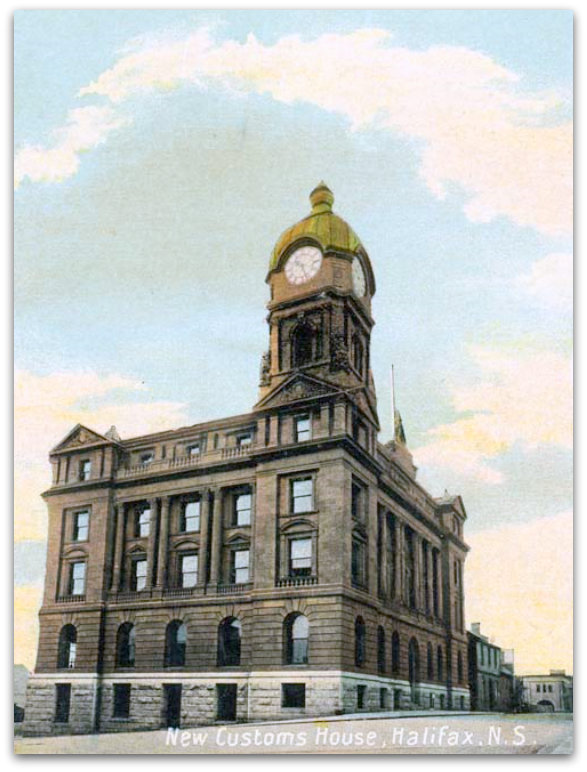
Source
However, that one was torn down a long time ago (1960?), so very few people will probably even remember it today.

Or the Halifax Memorial Library building, which still stands but has been vacant ever since the new library building was built. Its future is still in doubt, and IMHO it will most likely be torn down.
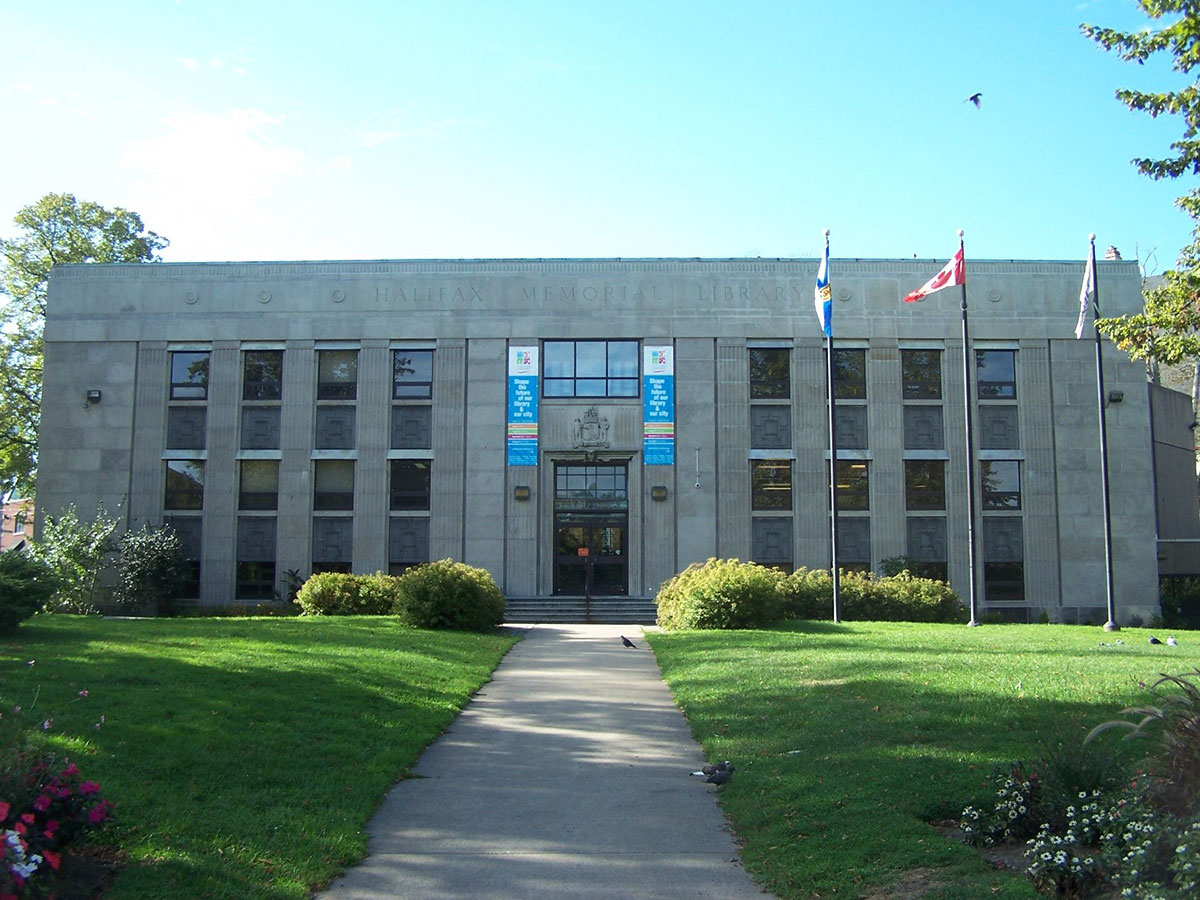
Source

There was also a less-detailed article on CTV's website:

Heritage lost: Halifax has lost 87 per cent of its heritage buildings, new study says

I used to post about this kind of thing here quite a bit, but kind of gave up after awhile as it seemed like very few people actually cared. It's nice to see it get some media attention finally, but it is still almost feeling like it's a little too late. At least there have been a few projects recently that include the preservation of a heritage structure, while building a large (box) building around it, or behind it. Small victories...

Reply With Quote
     
     
  #111  
Old Posted Nov 17, 2024, 6:07 PM
Keith P.'s Avatar
Keith P. Keith P. is online now
Registered User
 
Join Date: Mar 2006
Posts: 8,814
The perfesser’s study has got a lot of press coverage, though none of it seems to pick up on a historical reference to the Halifax Explosion which certainly had a lot to do with many of the buildings disappearing. Then there has been little discussion about something we talk about here from time to time, the reality that many old buildings here are unremarkable stick-built wooden boxes built to minimal cost with no architectural merit nor meant to last a very long time. Combine that with poor or non-existent maintenance over the years and it should be no surprise they are no longer with us. Losing a well-kept Victorian in the south end is one thing, but losing a run-down longtime rooming house with zero visual appeal is quite different.
Reply With Quote
     
     
  #112  
Old Posted Nov 17, 2024, 9:22 PM
OldDartmouthMark OldDartmouthMark is offline
Registered User
 
Join Date: May 2010
Posts: 10,321
Quote:
Originally Posted by Keith P. View Post
The perfesser’s study has got a lot of press coverage, though none of it seems to pick up on a historical reference to the Halifax Explosion which certainly had a lot to do with many of the buildings disappearing.
In case you didn't actually read the article, the quote below is taken from it:
Quote:
But he said redevelopment is not solely responsible for the loss of the city's historical buildings. Some were destroyed by fires and the Halifax Explosion of 1917, although the professor said the explosion's damage was relatively localized.

"The first thing that people say often when they hear about this project is, 'Well, the explosion must have taken out, you know, loads of things.' Well, it did, but in a certain area. Once you get into the downtown, there's very little damage," said Fowler.
To visualize the location of the Explosion damage, there was a map made from post-explosion surveys that illustrates the concentration area of the damage pretty well. You will note that south of North Street, it was mostly minor damage, like broken glass, cracked plaster, etc.


Source

Quote:
Originally Posted by Keith P. View Post
Then there has been little discussion about something we talk about here from time to time, the reality that many old buildings here are unremarkable stick-built wooden boxes built to minimal cost with no architectural merit nor meant to last a very long time. Combine that with poor or non-existent maintenance over the years and it should be no surprise they are no longer with us. Losing a well-kept Victorian in the south end is one thing, but losing a run-down longtime rooming house with zero visual appeal is quite different.
That's a narrative that you like to post here from time to time (the guy with the wrecking ball as an avatar... ), but I will balance your subjectivity with my subjectivity and state that of course there will always be some natural attrition (the study also mentions fire as a partial cause), but there have also been many cases of decent old buildings that have been demolished because there was an opportunity to do so, and Halifax has been very lackadaisical about any action to protect our built heritage.

Regardless, take it for what it is worth. Not everybody can appreciate the history of the place where they live, but for those that do have an appreciation, the information in the study gives a good graphical representation of how much remains. Whether this is acceptable or not is up to the reader to decide for themselves.
Reply With Quote
     
     
  #113  
Old Posted Nov 18, 2024, 1:02 AM
Empire's Avatar
Empire Empire is offline
Salty Town
 
Join Date: Sep 2003
Location: Halifax
Posts: 2,200
I have seen many buildings in the study area that have rather bland exteriors but are gems on the inside. Marble / slate fireplaces, heavy trim mouldings, cherry oak floors and intricate newel posts.

Hopefully this study will wake up the development community and lead to greater preservation and recreation of lost architecture.
__________________
Salty Town

Last edited by Empire; Nov 18, 2024 at 11:30 AM.
Reply With Quote
     
     
  #114  
Old Posted Nov 18, 2024, 12:38 PM
Keith P.'s Avatar
Keith P. Keith P. is online now
Registered User
 
Join Date: Mar 2006
Posts: 8,814
Sorry, but I fail to understand the pearl-clutching over this. Empire's example of an unremarkable-looking old building with nice interior features sounds like it might appeal to an architectural salvage operation but I would suggest most potential buyers want something that looks impressive on the outside. Regarding the more general comment, I am unsure why we would want to limit ourselves from allowing owners redeveloping property to the highest and best use as cities have done for centuries. If some quasi-govt body things a building is worth preserving, they should buy it and run it down themselves as govts tend to do.
Reply With Quote
     
     
  #115  
Old Posted Nov 18, 2024, 3:31 PM
OldDartmouthMark OldDartmouthMark is offline
Registered User
 
Join Date: May 2010
Posts: 10,321
There’s nothing about this that should be hard to understand. If you have an appreciation for the history of your city, you probably also have an appreciation for its old buildings. Keeping as many as possible intact helps to maintain the historic appearance of your city by maintaining a physical link to the past. Some people want this.

If you don’t have an appreciation for your city’s history, or you don’t care about maintaining a physical representation of how buildings were once built and how the city once appeared, you won’t agree with the assertions made in the article/study/posts on the subject, but surely most people are able to understand, even if they don’t agree.

I am biased, but I really don’t see why anybody would object to maintaining a certain percentage of historic buildings, other than the worry that we’re not following strict libertarian views like that anybody should be able to do anything they want with no responsibility to the greater community. Or, maybe some of us just like to argue about, well, everything?
Reply With Quote
     
     
  #116  
Old Posted Nov 19, 2024, 1:17 AM
Keith P.'s Avatar
Keith P. Keith P. is online now
Registered User
 
Join Date: Mar 2006
Posts: 8,814
Quote:
Originally Posted by OldDartmouthMark View Post
There’s nothing about this that should be hard to understand.
You’re right, it’s not hard to understand. Let me spell it out for you: You own an old but shabby and unmaintained building that some group has deemed historically significant but cannot afford to repair/restore and certainly not to bring up to current code. A developer who has assembled parcels surrounding yours needs your property to build his masterwork. Instead of the $500K assessed value, he offers you $10 million, conditional upon getting a demo permit. You want to take the money, but TPTB won’t issue the permit.

It is situations like this where a mysterious fire or gas explosion may be the only way to resolve the standoff.
Reply With Quote
     
     
  #117  
Old Posted Nov 19, 2024, 4:29 AM
someone123's Avatar
someone123 someone123 is online now
hähnchenbrüstfiletstüc
 
Join Date: Nov 2001
Location: Vancouver
Posts: 35,745
I think the takeaway from that map should be that these old pre-1878 buildings are now rare and worthy of preservation. Arguments like "you can't save everything" don't hold much water because we're talking about saving 10% vs. 5% at this point. There is clearly capacity overall to save these buildings because there's so much other development and economic activity. It is a matter of priority and policies.

At this point I wish there would be a push to reconstruct some buildings and ornamentation in Halifax. It would make a big difference to bring back a handful of landmark stone buildings from the 1800's or missing cupolas and clocks and so on.

Another point I think about is how many buildings from 1879-1940 were upgrades and how many from 1960-2000 or later were downgrades, at least as far as attractiveness and character go. There were nice older stone buildings on the Bank of Nova Scotia site that were replaced in the 30's but that is much more forgivable than the ugly empty lots that used to have beautiful buildings on them.
Reply With Quote
     
     
  #118  
Old Posted Nov 19, 2024, 12:40 PM
Empire's Avatar
Empire Empire is offline
Salty Town
 
Join Date: Sep 2003
Location: Halifax
Posts: 2,200
The complacency about protecting our built heritage and a style that is so definitive of Halifax is what is paving the way for the destruction of buildings such as shown in the link below.
The heritage study outlines that there is no comprehensive plan to stop the demolition of such unique architecture. Imagine a row of buildings being demolished in the Back Bay area of Boston…untenable.


Robie @ Jubilee
https://www.google.ca/maps/@44.6432444,-...MTExMy4xIKXMDSoJLDEwMjExMjM0SAFQAw%3D%3D

https://www.google.ca/maps/@44.6432601,-...MTExMy4xIKXMDSoJLDEwMjExMjM0SAFQAw%3D%3D
__________________
Salty Town

Last edited by Empire; Nov 19, 2024 at 2:19 PM.
Reply With Quote
     
     
  #119  
Old Posted Nov 19, 2024, 2:41 PM
OldDartmouthMark OldDartmouthMark is offline
Registered User
 
Join Date: May 2010
Posts: 10,321
Quote:
Originally Posted by Keith P. View Post
You’re right, it’s not hard to understand. Let me spell it out for you: You own an old but shabby and unmaintained building that some group has deemed historically significant but cannot afford to repair/restore and certainly not to bring up to current code. A developer who has assembled parcels surrounding yours needs your property to build his masterwork. Instead of the $500K assessed value, he offers you $10 million, conditional upon getting a demo permit. You want to take the money, but TPTB won’t issue the permit.

It is situations like this where a mysterious fire or gas explosion may be the only way to resolve the standoff.
So you create a specific story of a case that probably won't happen to justify the demolition of our remaining historic buildings? Your scenario plays along really well with the developers who purchase a building, and then sit on it for several years with no maintenance, knowing that eventually the building will be in such bad condition that they will easily be able to get a demolition permit. It would also allow a pristine building that has been restored to the finest details to be purchased by said developer (I mean $10 million could buy any house, couldn't it?) and allow it to be torn down to put up a concrete and glass box. It wouldn't matter how unique it was, or even if it had some link to a prominent historic figure - big money gets its way at the expense of the collective history of the city (or province, or country, for that matter... Halifax has a rich history with many firsts for the entire country).

There has to be a happy medium, that puts up guardrails and doesn't allow our historic buildings to be destroyed just because somebody wants to make money. In that happy medium, maybe fringe cases could still happen, like your poor owner of the house that nobody wanted to maintain could still cash in on their lottery winning, and get rewarded for letting their building become a slum, while most of the remaining ones could be saved for future generations to appreciate. I don't see why you would want to cheat future generations out of their history just because some imaginary person might to cash in on their old house that they've neglected.

The people behind the study see that as well, as indicated by this quote from the article:
Quote:
"None of us think we should just arrest change and put a plate of glass over Halifax ... but I do think we could be more thoughtful about these deletions because you can only do it once."
Meanwhile, why couldn't we have a scenario where that owner who can't afford to maintain their home sells the home to a person who will want to fix it up and restore it to its previous glory? Sure, the developer in your very specific story will have to build a smaller building, or sell off the lots at a profit and build somewhere else, and the home owner doesn't get a lottery-sized windfall for their house, but why is that one person gaining wealth and that one developer being able to maximize profits more important than protecting the few remaining historic buildings and turning Halifax into a generic city that could be anywhere? Heck, you have recently posted your distaste for the appearance of new buildings in Halifax, so you must have some idea of why this might be important.
Reply With Quote
     
     
  #120  
Old Posted Nov 19, 2024, 4:02 PM
Drybrain Drybrain is offline
Registered User
 
Join Date: Sep 2012
Posts: 4,542
Quote:
Originally Posted by Empire View Post
The complacency about protecting our built heritage and a style that is so definitive of Halifax is what is paving the way for the destruction of buildings such as shown in the link below.
The heritage study outlines that there is no comprehensive plan to stop the demolition of such unique architecture. Imagine a row of buildings being demolished in the Back Bay area of Boston…untenable.


Robie @ Jubilee
https://www.google.ca/maps/@44.6432444,-...MTExMy4xIKXMDSoJLDEwMjExMjM0SAFQAw%3D%3D

https://www.google.ca/maps/@44.6432601,-...MTExMy4xIKXMDSoJLDEwMjExMjM0SAFQAw%3D%3D
I'm torn on this. I hate to see well-maintained and attractive Victorian houses go (they aren't an infinitely renewable resource), but Robie is one of the main thoroughfares of the city, and urban development and growth inevitably leads to greater density. The Back Bay comparison doesn't entirely work for me because most of Back Bay is residential streets, and this is a mixed-use main arterial. If there's a comparison to anywhere in Back Bay, it would be Commonwealth Avenue, and, well, look. This is already metropolitan in scale. The Robie buildings are single-family houses. It's hard to compare.

Robie in particular is also tricky street: it's not like South Park or Inglis or Queen or any other heritage-rich street, many of which are largely protected by low-rise zoning and, under the Centre Plan, forthcoming HCDs. It's a major arterial identified by zoning as a growth corridor. If there's one heritage-filled street likely to be largely redeveloped in coming years, it's this one. I'd like to see a focus on preserving certain stretches of it--University to SGR would be a good example, as almost every building is exceptional. (Unfortunately over the past year someone has ruined this building, covering it in vinyl side, dismantling the porch and stripping all the detail off. There's now a huge FOR RENT sign outside it, and I wince whenever I see it. People complain about heritage districts limiting what people can do with their property, but on balance I think reasonably heritage rules are preferable to letting people take an exceptional piece of architecture with a disproportionate impact on the city's aesthetics, and turn it into a student-housing box.)

Beyond a stretch like that, a few particularly valuable houses could be heritage-listed, and the rest of the street redeveloped. These are beautiful houses that merit conservation. These? They're nice enough but expendable, IMO.
Reply With Quote
     
     
This discussion thread continues

Use the page links to the lower-right to go to the next page for additional posts
 
 
Reply

Go Back   SkyscraperPage Forum > Regional Sections > Canada > Atlantic Provinces > Halifax > Urban, Urban Design & Heritage Issues
Forum Jump


Forum Jump


All times are GMT. The time now is 11:11 PM.

     
SkyscraperPage.com - Privacy Statement - Top

Powered by vBulletin® Version 3.8.7
Copyright ©2000 - 2026, vBulletin Solutions, Inc.